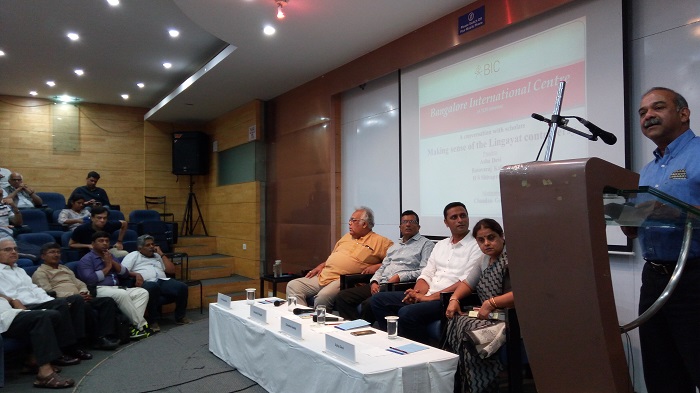
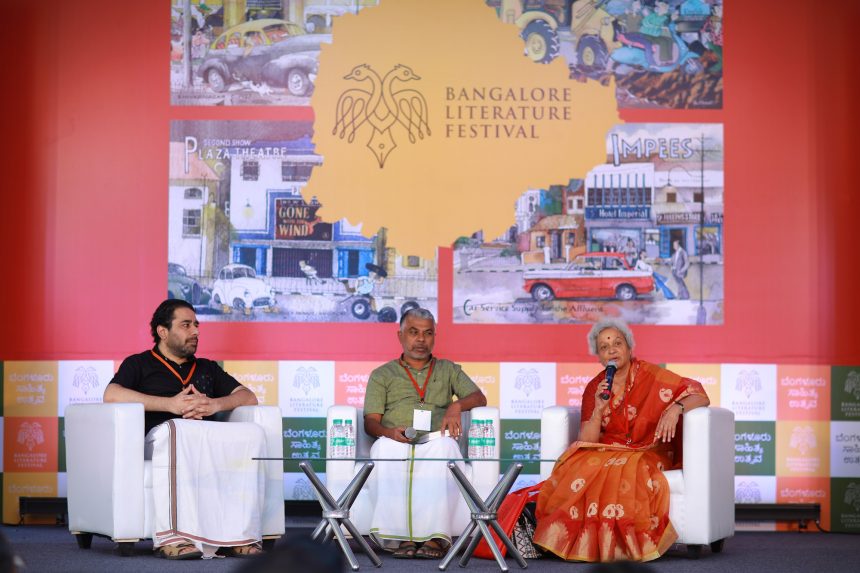
On May 28, 2018, the Bangalore International Centre hosted a discussion titled ‘Doklam 2.0’ to discuss the standoff that happened at Doklam between the Indian and the Chinese army and the sequence of events that followed. The panel included Ambassador Nirupama Rao, Lieutenant General Prakash Menon and Anirudh Kanisetti, Research Associate from Takshashila University.
Historical Overview
Anirudh Kanisetti kicked off the evening with a short presentation setting right the historic context for the audience. Anirudh said, we generally associate Himalayas with peace and serenity. However, the Himalayas are a cultural and ethnic melting pot and therefore is a site of great fractious conflicts. According to him, the 18th century was important for many reasons, the most important being the arrival of Gunpowder. Historically, Gunpowder has led to the replacement of existing power structures with new emerging powers. One such power structure in Himalayas was the institution of Dalai Lama. We tend to assume that Dalai Lamas were the Heads or the rulers of Tibet which is not true. As of the 18th century, Dalai Lama was one of the leaders of the many competing monastic orders and aristocratic nobles who were trying to take control over Tibet, thanks to its economic wealth.
This was also the time when China was pushing into the Central Asia because they had gunpowder. During the 18th century, new states like Sikkim, Bhutan, Nepal were emerging. Sikkim and Bhutan are claimed to be founded by the Lamas from Tibet. Owing to a myriad of geopolitical factors, the period between 1720s to 1750s was full of conflicts for Tibet. During this time, the Dalai Lama was acting as an intermediary between the Chinese emperor and the tribes of Central Asia. So, the Dalai Lama called the Chinese to help with the domestic conflict in Tibet which resulted in the establishment of Dalai Lama’s authority as the central power in Tibet. This also led to the establishment of a small but permanent Chinese garrison in Tibet.

In 1790, when the kingdom of Nepal was formed, it soon invaded Tibet, thanks to its control over multiple, extremely wealthy trade routes. The Dalai Lama sought the Chinese help again. The Chinese defeated the Nepalese and established a formal protectorate in Tibet. That practically meant that a huge garrison was present in Tibet and the Chinese Governor had to sign off on few things that the Dalai Lama decided on. The same influence did not continue during the 19th century. China was struck by a series of catastrophes such as the Taiping rebellion and suffered humiliations in the hands of the western trading powers during the Opium Wars.
The British introduced a new element into the politics of Himalayas. They were interested in securing trade that went from China through Tibet into Kolkata which eventually resulted in 1890’s Anglo-Chinese convention. This led to the establishment of a border between Sikkim, which was already a protectorate of British and Tibet, a protectorate of China. It is interesting because Britain signed on behalf of Sikkim and China on behalf of Tibet. However, Bhutan which was also bordering the area was not part of the convention because the British were still working hard to get the Bhutanese to agree to the terms of the convention. This finally happened in 1910 when the British signed the Treaty of Punakha. Even though an alliance was signed, the Bhutanese never agreed to the 1890’s treaty. So, it meant, the parties who were involved in this conflicted area never really signed it and Bhutan did not ratify it.
As per the treaty, “The boundary of Sikkim and Tibet shall be the crest of the mountain range separating the waters flowing into the Sikkim Teesta and its affluents from the waters flowing into the Tibetan Mochu and northwards into other Rivers of Tibet. The line commences at Mount Gipmochi on the Bhutan frontier, and follows the above-mentioned water-parting to the point where it meets Nipal territory”. China asserts that by this Convention, the starting point of the Sikkim-Tibet border is “Mount Gipmochi on the Bhutan frontier” and that this clearly defines the tri-junction point. However, India’s perspective is that that there were no mountain surveys done during 1890s and after the mountain surveys, the actual peak of the mountain range is Batang La which should be the starting point of the border line. This is in line with the watershed principle and add to it the fact that Bhutan was never a party to this treaty.
In 1958, after China had taken over Tibet, the head of the Chinese mission made a very
controversial statement,” “Bhutanese, Sikkimese and Ladakhese form a united family in Tibet. They have always been subject to Tibet and to the great motherland of China. They must once again be united and taught the communist doctrine.”. Going by history, this was not true since China was never the motherland and the influence that China had on Sikkim or Bhutan is questionable. This statement was received with greatest alarm in Bhutan because it seemed to imply that China wanted to invade Bhutan. This was further strengthened in 1960 by a massive influx of Tibetan refugees to the northern border of Bhutan after which Bhutan closed that border, cutting off ties with China. This meant good for India and the strengthening of Indo- Bhutan ties. All that changed after 1962 Indo-China war. Bhutan was no longer confident that India could protect its interests. So, in 1971, as soon as Bhutan got UN membership, they began negotiations with the Chinese to resolve the disputes. Since 1984, the talks between Bhutan and China have been proceeding and the crux of these talks have mostly been border issues. In 1990, the Chinese proposed an exchange of territories. China offered to exchange 495 sq km area of Pasamlung and Jakarlung valleys (where China and Bhutan overlap) in Bhutan’s north for Sinchulumpa, Dramana and Shakhtoe with total area of 269 sq km, in the western Bhutan. The answer to the question of why China wanted this exchange lies in Paro, which is the only functioning airfield in Bhutan. It was of strategic importance to China. Although the Bhutanese agreed in 1995 to the exchange, nothing much came out of it. In 1998, China affirmed that it respected Bhutan’s sovereignty. However post 2000, the Chinese seemed to have forgotten their affirmations and these years have been marked by multiple Chinese incursions into Bhutanese territory. Over time, China seized huge area from the Bhutanese territory and this is a major point of contention between Bhutan and China.
After laying out the history behind the border conflict, Anirudh gave the stage to Prakash Menon who explained the importance of Doklam in military and strategic terms. According to him, this region is sensitive for India because if the Chinese come over to Doklam, there is only one ridgeline left between China and India. However, it is not about whether the Chinese will come to India but it is about the fact that the Chinese can come. He recollected the events of the first Doklam standoff which started from June 16, 2017 when the Chinese began construction of roads and Indian troops physically stopped them on June 18, 2017. A week later China made public statements and reacted to this standoff in an extreme manner reminding India of 1962.They published videos of live firing drills in Tibet and accused India of hegemonic diplomacy. India’s reaction to this standoff was however, very measured. On June 29, Bhutan raised a complaint against China but China did not back off. On July 26, 2017, China published a new map, an official sketch map claiming Doklam to be part of China. On 28th of August, right before the BRICS conference, things de-escalated. However, the official statements from India and China were in different tones. India’s official statement on Aug 28, 2017 read, “In recent weeks, India and China have maintained diplomatic communication in respect of the incident at Doklam. During these communications, we were able to express our views and convey our concerns and interests. On this basis, expeditious disengagement of border personnel at the face-off site at Doklam has been agreed to and is on-going.” Chinese official statement on the other hand made clear it would “continue its sovereignty rights” in the area.
During the first week of September, China began the construction of a new road about 2.5 Kms away from the original standoff site. According to Prakash Menon, it is not possible that the Indian surveillance missed this new development. The Print magazine published the satellite images of the new constructions on Jan 17, 2018. The Ministry of External Affairs reacting to this news remarked that the status quo has not been altered at the face-off site. Later, on March 6, the Defence Ministry remarked that the PLA has started some construction but the troops from both sides have been recalled from the face-off site. A similar remark was made by General Bipin Rawat on March 17, that some temporary infrastructure work was being done by the PLA. On 19th March, The Print published new satellite images of new roads to Torsa La. On March 23, 2018, India’s Ambassador to China made a strong statement that any change in status quo will lead to a situation as happened in Doklam 1.0. Once again, China came back strongly saying Doklam belongs to China and threatened India to stick to the historic conventions. While all of this was happening, the Indian media which was all over Doklam 1.0 was completely reticent. The public was uninformed about what was happening in Doklam 2.0 and it is not clear if the parliament was briefed about the developments. Interestingly, Bhutan has been silent too.
Pointing to the series of events that happened during September 2017 till now, Prakash Menon recalled how Wang Yi, the Chinese foreign minister made a statement on Dec 10, 2017 about “the Dragon and the Elephant dancing together and how 1+1 =11”. This was followed by another round of boundary talks. On Feb 22, the Foreign Secretary’s note to the Cabinet Secretary about moving the thanksgiving event from Delhi to Dharamshala was leaked to public. On the same day, MEA withdrew political clearance for the Asian Security Conference of the IDSA which was to discuss the relationship between India and China. On Feb 23, the Foreign Secretary’s visit happens and Wang Yi repeats himself about the Dragon and the Elephant. On March 27, 2018 China agreed to share data on Brahmaputra with India. Prakash Menon also pointed out the Indo-China meetings in the backdrop of Shanghai Conference and Wuhan Summit and how Australia was dropped from the Malabar exercise. According to him, the policy adopted by India at the moment is to not raise the issue of Chinese aggression in the disputed territory with Bhutan and this is going to have implications on the Sino-Indian, Sino- Bhutan, Indo-Bhutan relationships. This also affects India’s image amongst its neighbours and it might make them believe that India cannot handle a Chinese aggression.
Nirupama Rao, who took over from Prakash Menon remarked that she needed to articulate upon few factors that the Doklam Saga elucidates. Firstly, it is the kind of diplomacy that China practises today. We all talk about the power of diplomacy but what China practises today is the diplomacy of power. The Chinese are no longer a rising power and in the race for attaining global recognition, the Dragon has galloped ahead of the elephant. Secondly, what China practises today is coercive diplomacy. China is able to have its way as it wills when a dispute arises. She says she is not pointing to any incipient weakness on the Indian side or its Army because we have dealt with them for decades. A 3418 km long boundary is essentially undecided between India and China. The line that we took before 1962, the boundary that was decided by geography, tradition, custom, treaty etc. are now on the discussion table. According to her, the events that happened post Doklam, be it the treatment of the Dalai Lama’s 60th anniversary, the remark of the Dragon and Elephant dancing together, the decision of not including Australia in Malabar exercise, or the informal summit in Wuhan, indicate pragmatism coming into play.
With all the high decibel levels of activity and rhetoric that was expressed, the government tried to calm the waters, lower the temperature and dial down the decibel levels. The reason India does that is because Doklam is not only about India and China, it is also about Bhutan. The disputed territory of Doklam is essentially in Bhutan. According to her the Sikkim – Tibet frontier is the only section of the Indo-China border where there is a treaty arrangement which decides where should the boundary be. We do not have such arrangements in the west. West of the Karakoram pass, we have the whole complication of what Pakistan and China have done together. They have a boundary agreement dating back to 1963 which covers Pakistan occupied Kashmir. East of the Karakoram pass, we decided on the boundary alignment in 1953-54, after the Panchsheel agreement was signed. There again we do not have an agreement on where the boundary lies. We have an actual line of control where you hear from time to time about the Chinese transgressions. East of that, where you have Himachal Pradesh and Uttarakhand, it is a relatively uncomplicated border but there are a few passes which are disputed between India and China. We regard them as border passes whereas China claims them to be under their sovereign.
The eastern section of the boundary which the Chinese call as ‘Sector of the largest Dispute’ involves Arunachal Pradesh. The position taken by China when it comes to border disputes has been changing over time. In 1985, China wanted India to make concessions in the eastern section if we wanted China to make concessions in the western. They have their eye on Tawang. Speaking of how Bhutan fits in this narrative, she says eastern Bhutan abuts to Tawang district of Arunachal Pradesh whereas western Bhutan is close to Sikkim. The Chumbi valley which is a triangular area referred to as the dagger points to the Siliguri corridor lies in between these two regions. This is a very vital and strategic area in Indo-China borders. In the early 50s, the political officer from Gangtok used to travel to Bhutan and to Lasa via the Chumbi valley. PM Nehru made his very historic visit to Bhutan from Sikkim through the Chumbi valley when he was 69 years old by travelling on a Yak and that really opened Bhutan up to India. We have very important treaty relationships with Bhutan and Bhutan undertook to consult India on matters relating to external security and where issues of national interest of both the countries were involved. There have always been close connections between India and Bhutan and we have the best bilateral relationship with Bhutan as compared to any other country. It is called the “Beneficial Bilateralism”. While you might hear voices in Bhutan about if they are getting the best deal in this relationship and about the effects of demonetization or GST in Bhutan, India still enjoys the trust of Bhutan and the constitutional monarchy of Bhutan has the closest relationship with India. China always regarded Bhutan as a vassal state and it has never withdrawn from that idea. This has kept Bhutan away from China. It would be suicidal for Bhutan to have a diplomatic relation with China without having a boundary agreement. Being a smaller state, it will be difficult for Bhutan to handle Chinese aggression and that is why it was important to calm the waters in Doklam. Issues of strategic importance which involves security have to be discussed quietly keeping Bhutan’s interests too in mind.
This was followed by an intense session of Q&A where Prakash Menon insisted that India could have taken the opportunity at Doklam and stepped up against China while it was bullying Bhutan. He was concerned that the outcome of Doklam will only encourage China to assert more of its bullying nature against other smaller states. However, the Ambassador maintained that India has been able to hold the Chinese off for the last few decades without a war. It has been 43 years since the last recorded incident of bloodshed across Indo-China frontier at Tulung La. We need a very dispassionate assessment of where we stand with China. We need time to settle our challenges within this country. She questioned as to who wanted a war with China in present times and reiterated that we should be sensitive to what Bhutan wanted out of it. Bhutan and India needed to be on the same page to arrive at a solution. It was not about firing salvos at China and saying that Doklam 2.0 happened. “What is the use of telling public about it, because it just goes to the evening news with live fire on televisions and the anchors discuss what should be the next steps. That is not how diplomacy works”, she emphasised.