Skip to content

TheSeer

For The Mindful Individual

  • Book Reviews
  • Bookmarks
    • Literature
    • Culture
    • Sociopolitical
    • Others
  • Interviews
  • Events
    • Upcoming Events
    • Events Coverage
    • The Seer Events
      • Singularity – Creative Learning Camps for Children
      • VoiceDabba – An Online Public Speaking Workshop for Children
      • Bangalore Reading Club Meetings
    • Partnered Events
      • BLF 2020
      • BLF 2019
      • BLF 2018
      • BLF 2017
      • BPF 2018
  • Contests
    • Kids
      • Young Reviewer Contest for Children – Winners Announced
      • StoryBaaz – A Story Writing Contest for Kids
    • Winning Entries
  • Our Services

Typeset, Ready, Go!

November 10, 2019November 14, 2019 TheSeer Team

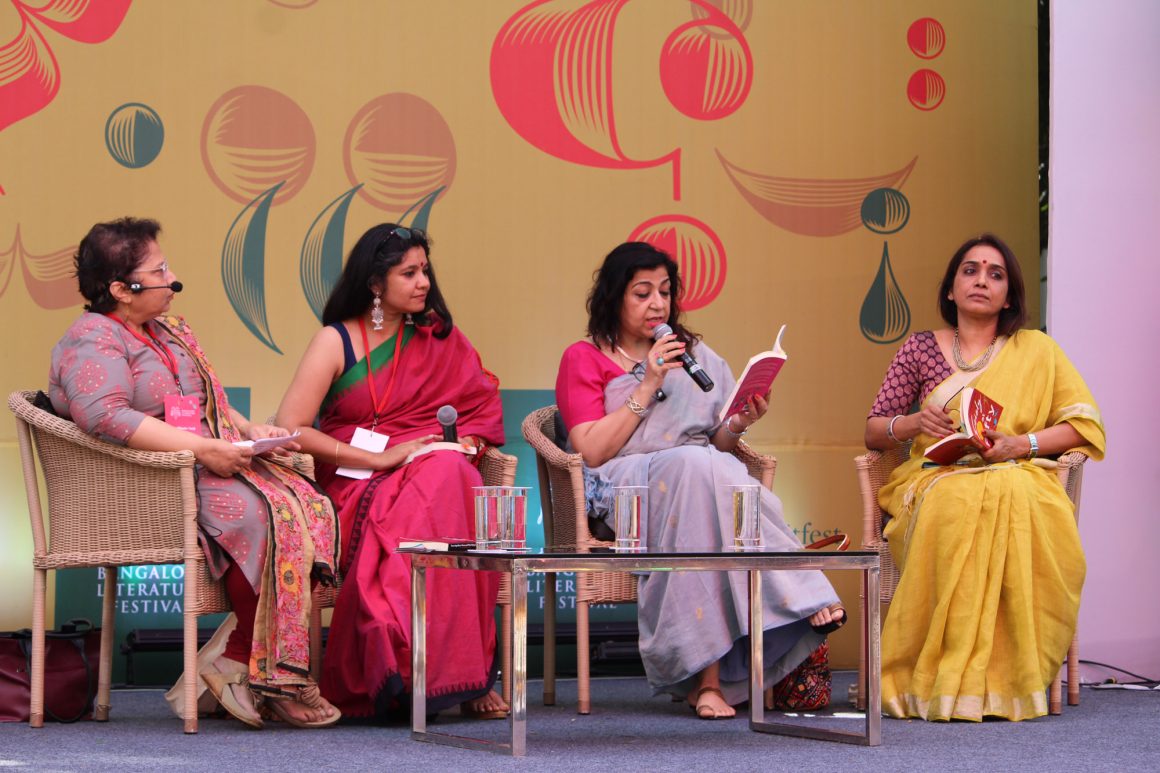
The afternoon session commenced at the Tughlaq stage with Ravinder Singh, an Indian author and a software engineer. Ravinder is a best-selling writer in romantic genre from the state Odisha, with eight successful novels to his name and a publishing house named ‘Black Ink’, which promotes aspiring writers.


He headed the panel discussion that included Teesta Guha Sarkar, a senior commissioning editor at ‘Pan MacMillan India’.  The other two panellists were Himanjali Sarkar, currently an editor with ‘Bloomsbury India’ and Udayan Mitra, a publisher at ‘Penguin group of India’.


Ravinder was excited to be on the other side of the table, asking questions rather than answering. He started the discourse with the statement, “Art of publishing is like a black box”. For the readers, it is all about the end product, the book or the novel, but there is a lot happening behind the curtains. The discussion was engaging with two contemporary Bengali people on either ends of the panel contradicting on various aspects of writing. Himanjali claimed that while currently in India the number of readers are at peak, but judging by extreme population, there is still a room for enhancement. Udayan enlightened the listeners about the print run scenario in India which has grown over the years from 1,000 to 3,000. 


Teesta advocated the fact that works of literature may be of high merit to some publishers and of none to some others. The panelists discussed and dwelled upon the aspect of good writing and what actually defines a good write-up. There were a lot of viewpoints about the importance of language and literature in publishing. There were also talks, arguments, and suggestive measures for debut author and aspiring literati. 


The author function was well elaborated and guidelines were provided to experiment with different genres and fusing various aspects of literature. An extensive argument was established in favour of Indian authors who have been attempting different genres. Some genres have been totally untouched like the horror and the gothic fiction. The panel also discussed the rise and fall of e-reading. Himanjali touched upon the physical literature aspect. Ravinder spoke about the dynamics of audio-visual format of literature which is now enjoying a fair share of appreciation from the Indian audience. 


Towards the end, the panelists also portrayed their significant worry towards the peculiar aspect of readers who tend to love western crime stories but are disinterested in reading Indian versions of crime coverage. They closed by drawing parallels to visual media in India which adores crime stories like “Mirzapur” and “Sacred Games”. They defined the guidelines for a good novel for debutants and had a hearty discussion on the questions put forward by the audience. 


About the Author: Abhinav Kumar is an MA in English with Communication Studies student from CHRIST ( Deemed To Be University), Bengaluru who believes in “No matter what people tell you, words and ideas can change the world”. He is interested in sports journalism and travelogue writing. He currently writes for TheSeer.
 

The Making Of Islamic Womanhood

November 10, 2019November 14, 2019 TheSeer Team

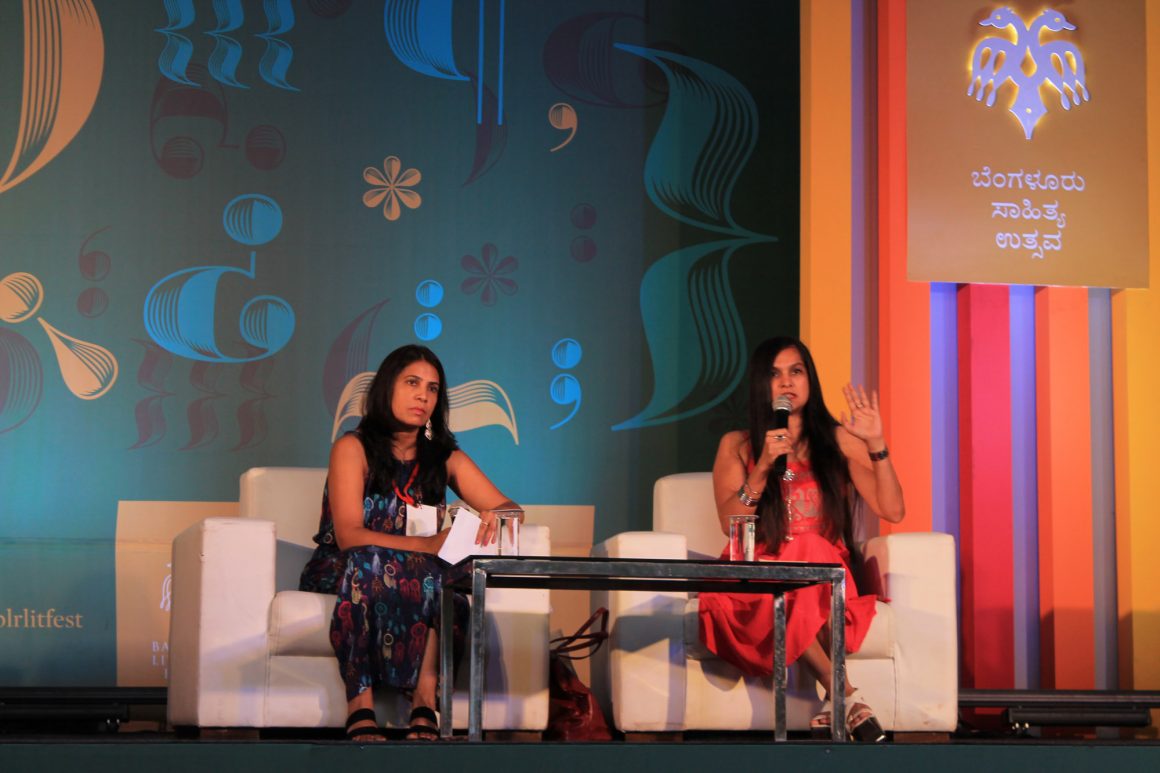
The session had Hem Borker in conversation with Abdullah Khan. Hem Borker, a PhD scholar from Oxford University published her first book, “The Making Of Islamic Womanhood” in 2018.  The book is a reflection of her deep interest in studying the condition and grooming of Isamic women and girls in India. It also captures the complexities of Muslim identity, gender and madrasa education system, its structures and how it has evolved over a period of time. She also records the shift from traditional to modern system of the madrasa education for girls. 

The session started with Hem establishing what a madrasa is, then went on to to delve further into the issues of gender. She discussed how the institution of madrasa not only focuses on subjects like other schools, but also offers an orientation to the culture and religion of Islam. Madrasa, she said, provides  a holistic understanding of religion and culture, which would enable the students to be well acquainted with their own religion and culture. 

Borker said that madrasa teaches woman students what it is to be a muslim woman in the Indian society and  the appropriate ways to act. She made it very clear that this practice should not be seen as rigid, rather as an intellectual move.  

The session also saw Borker exploring certain practices that she does not approve of. One such is the routine set for young girls, who are required to wake up quite early in the morning to revise their Quran lessons and offer prayers. 

To conclude, the session emphasized the contribution of madrasa in establishing the personality and image of islamic woman.  The takeaway was that any islamic family who are hesitant to send their daughters to co education schools can rely on madrasa as it provides education as well as acquaints students with Islamic culture. 


About The Author: Aditi Dua is a Masters student in English with Communication Studies who has a knack for aesthetics and poetry. Apart from being a literature enthusiast, she highly celebrates challenging ideologies and provide disputing ideas of death. Always available for a conversation over good coffee. She currently writes for TheSeer


Trends and Technologies Shaping our Tomorrows

November 10, 2019November 14, 2019 TheSeer TeamLeave a comment

Ian MacDonald, a British science-fiction novelist who won BSFA award for his book River of Gods which is set in mid 21st century India, was talking about Trends and technologies shaping our tomorrow.

Ian’s book themes include nanotechnology, post-cyberpunk settings, and the impact of rapid social and technological change on non-Western societies, and the topic of the session could not be apter.

When asked by the moderator Yudhanjaya Wijeratne is manipulation of the general public through social media dystopia coming true, he replied by saying “yes it is”, and went on to mention that how scary it was that seventy-five per cent of people in the UK were using Facebook to consume news. He also suggested some measures to contain the negative effects of social media. He said that shutting down Facebook or any other social media giant was not a solution but they need to accommodate changes to minimize the negative effects of the social media platforms.

When the moderator asked about his thoughts on urbanization, he said whenever there is development there are bound to be adverse effects along with the opportunities but there need to be proper planning and execution and people responsible need to be held accountable. He mentioned how cars were one of the worst effect drivers of urbanization.

While talking about the development he suggested that authorities should involve local communities in the process and also mentioned how in Afghanistan a local community built their own WiFi network.

The discussion then went to artificial intelligence and automation and how it is going to affect the jobs. He also mentioned that unlike other inventions it is going to affect both the white-collar as well as blue-collar jobs.

About the Author: An avid reader and traveller, Prashant likes to write and often expresses his opinions ranging from entrepreneurship to travel on his blog www.stonedsaint.com. He writes scripts for Edtech companies and also happens to be a  marketing geek while struggling to clear his engineering backlogs. He currently writes for TheSeer.

The 6th String of Vilayat Khan

November 10, 2019November 14, 2019 TheSeer Team

As the second day of the 8th edition of the Bangalore Literature Festival dawned, exactly at 10.45, the visitors sitting by the Tughlaq stage were treated to the melodious sitar tones as the renowned author and journalist Namita Devidayal took over the stage to talk about her book – The Sixth String of Vilayat Khan. She was accompanied by Nandita Bose, well-known for her works like- If Walls Could Weep, Dewed, etc.


Namita opened the session with a brief reading of an account from her book where she paints a picture of the life of Ustad Vilayat Khan- the iconic sitarist better known as the trendsetting sitarist. She read out the opening account of her book which revolves around a music concert in Delhi in 1952 where Ustad Vilayat Khan happened to rub shoulders with Pandit Ravi Shankar. She quoted that Ustad Hafiz Ali, who was also present in the audience  had exclaimed “Maar Daala” (means “he killed”) , rightly explaining what a fine instrumentalist Ustad Vilayat Khan was.


Namita further discussed how the project came to her. It basically started with Vilayat Khan’s younger son, Hidayat who approached her to take up this work. It was also pointed out how elaborately people knew about Pandit Ravi Shankar but the least about this iconic sitarist, Vilayat Khan. 


Namita told the audience that she considered Khan as a complete rock star! Ustad Vilayat Khan was of the view that subtlety in music was of prime importance. Thus, she was completely smitten and took up writing about this man. Nandita added that throughout the book Vilayat Khan “is being looked at with so much love”.


Namita’s decision to write this book was also triggered by the painful life of Vilayat Khan. “Every tear of pain in my life, I have turned into a note.”, Vilayat Khan had said. Khan who liked sticking to learning with singers rather than sitar players tried to bring in the nuances of human voice to his sitar tunes, provided Namita. The most notable fact was that Khan transformed the conventional sitar to the modern day 6 strings sitar.


On being asked by Nandita to draw a comparison between Pandit Ravi Shankar and Ustad Vilayat Khan who were contemporaries as well as frenemies, Namita said, “It is gruesome to compare artists”. However, she did point out that while Pandit Ravi Shankar liked to experiment internationally with his music, Ustad Vilayat Khan experimented and created contemporary sound without fusion. 


The session concluded with another round of reading of an account by Namita from her book, with sitar tunes at the backdrop which lyrically summarised the book and expressed how Ustad Vilayat Khan was true to his certainties and always wanted to stick to what he believed in.


About the Author: Upasana Mahanta is an MA in English with Communication Studies student from CHRIST (Deemed To Be University) – Bengaluru, who firmly believes that there is nothing more exhilarating and liberating as poetry. She finds solace in writing poems and travel blogs and has amongst her laurels a 1st Prize in the English category of the All India Poetess Conference, Meghalaya Chapter’s Seventh Poetry Competition cum North East Poetry Festival. She currently writes for TheSeer.

Jill of all Trades

November 10, 2019November 14, 2019 TheSeer Team

How many of us are Jill of all trades? The session saw a very refreshing and joyous discussion among the rock stars of female fiction- Milan Vohra, Minnie Vaid and Piya Bahadur, hosted by Sudha Menon.


Each of these women, including the host herself, has written about women in various fields, bringing to light different female characters and how they break stereotypes. The session began with the authors reading out selected sections from their novels. 


Minnie Vaid spoke about her book, ‘Those Magnificent Women and their Flying Machines: ISRO’s Mission to Mars’. Her book uncovers the contribution of the team of female scientists in ISRO’s missions. Interacting with the female scientists was very empowering for Minnie. She recalled how she was baffled at the lack of any pictures of these women. The work of women in scientific fields is highly unrecognised. In a candid moment, she commented about how she, herself, held stereotypes about women scientists, and through her research and the time she spent with them, she came to realise that they work much harder than they are given credit for. 


Piya Bahadur recounted her biking journey with three other women, and what made her decide to go on such an adventure. Piya and her female entourage showed to the world that women, too, can embark upon great adventures when they biked seventeen thousand kilometres, across seven nations. “We owe it to ourselves to do what we want to do. When you realise that there is nothing holding you back, you can achieve anything.” These inspiring words left the audience in awe.


The only fiction writer on the block, Milan Vohra, spoke about how she felt while researching for her character, Ragini, in her novel ‘Our Song’. Music is one of the key elements in her book. Milan spoke about how she had to get a deeper understanding about music and how it affects the emotions of people. Do people react differently to different music, depending upon their mood? Milan tried to find out, as she developed her character.


While researching for her book, Minnie was fascinated, as well as intimidated, as she interviewed the women scientists of ISRO. ‘Nerves of steel’- that’s what drives these women. Out of the twenty-one women she met from the team, all of them were immensely proud of working for the nation. They were incredibly hardworking and determined, even after the failure of the launch of the Mars mission.


Super excited about her biking adventure, Piya remarked about how it was not always easy to continue every day. Before they started to drive each day, they left their houses by simply thinking, “yeh toh ho hi jaayega!” (“this is bound to happen”). Before stepping out, it was important to think that they will succeed. Things like deciding on where to eat became a tough task, as they could not always count on the highway food. It was a group of four women, so there had to be ego clashes! 

“What’s the best thing a woman can cultivate”, asked Sudha.


For Minnie, it was endurance. Women have a powerful capacity to endure anything. Piya agreed and added in that persistence was also something that women could acquire. With persistence, there’s no room for failure. Milan viewed that self-belief was a quality all women should have. Sudha, too, added in, as she believed that one must be a constant learner, a student throughout our lives. 


It was a fun and lively session. It was inspiring to be among such passionate and successful women, as they conveyed to the audience the potential of women – how they truly are the Jills of All Trades.


About the Author: Passionate about saving the environment, and driven by politics and philosophy, Anusha Basu writes about the musings she perceives everyday. She is currently pursuing her English Hons degree at Christ University, Bangalore. She currently writes for TheSeer.


Bestsellers – Wake Up, Life is Calling

November 10, 2019November 14, 2019 TheSeer TeamLeave a comment

Is there any reader who doesn’t know Preeti Shenoy? Not at all. people of all ages love her work. 

Preeti Shenoy is a Banglore based, one of the top five highest selling authors in India. Having written in varied theme and life experiences, she is one of the most influential writers in India. Her books are a source of new hope and enlightenment to readers. They have been translated into several languages. She’s well known for her poetry and short stories. She is also an artist specialising in portraiture and illustrated journalling. 

Preeti Shenoy was in conversation with Vani Mahesh. Vani Mahesh is a good old friend of Preeti and also a fellow writer. Best-selling author Preeti Shenoy was slated to speak about her new book, ‘Wake Up, Life Is Calling‘. Wake Up Life’s calling is a sequel to Preeti Shenoy’s iconic bestseller ‘Life is What You Make it’. Roughly eight years later the author released the sequel. 

The book deals with the human mind and the immense power of positive thinking. The gripping narrative demonstrates with gentle wisdom how by changing our thoughts we can change our life itself. The author has researched so much on mental health for nearly for two years. Written in a simple language, this book revolves around the topics of friendship, truth, and mental health. It also reinforces the power of positive thinking and how it can change our lives.

Explaining the title, Preeti said, “I wanted something inspiring and positive that connects ‘life’ in it. But it had to be distinct from ‘Life Is What You Make It‘. We had about 30-40 titles and, when I heard Wake Up, Life Is Calling, I knew it was apt for the story. Preeti also said none of my readers knows that I’m an introvert. 

Preeti also unveiled the jacket of ‘Wake Up, Life Is Calling‘ logo for her readers. The flower symbolises life, both are beautiful. Then something terrible happens and scatters the petals, destroying the flower. 

There was also a rapid-fire round with the author. ‘Wake Up, Life’s Calling’ is all about love, hope, and dreams. In conclusion, the session was more inspiring, informative and fun. What Preeti conveyed is to be a dreamer and an achiever. 

About the Author: Bhuvanashree Manjunath is an Engineering student, also an avid reader, poet, and a blogger. She also works as a book reviewer. She currently writes for TheSeer.

Line of Sight

November 10, 2019November 14, 2019 TheSeer Team

We had Vaibhav Purandare in conversation with our esteemed guest of the hour, former cricketer and umpire of the Australian Cricket Board, Mr. Simon Taufel. Mr. Simon launched his latest book, Finding the gaps at the Bangalore Literature Festival. His legacy as an umpire at the international cricket has established him as a stalwart of the gentleman’s game providing the necessary momentum for the launch of his book. The book essentially attempts at transferring the rules, regulations and teachings of cricket and its surroundings to the everyday life of an individual. 


Considering the conversational narrative style of the book, there is a certain sense of personal touch to it. Simon expressed that cricket provided him with the perfect platform to write a book that covers the imperatives of living a successful life. Cricket, seen as a simulation of life, requires a certain sense of dignity, responsibility and resilience to achieve objectives at a personal level and organizational level. The book is a testament to the attributes of cricket which can be transported to the contemporary world. 


Simon further claimed that he genuinely enjoys sharing and providing information. Being able to invoke people’s potential was the primary reason for Simon to become a mentor off the field in the profession of life. He decided to quit the role of an umpire. He believes that mentorship and training to an individual is imperative in order to achieve success in life as it provides a sense of direction. The act of coaching, training, and professional development on and off the field of cricket has been an enticing and enriching journey for Simon. 


He spoke about the importance of books and the nuances that it contains which creates a reverence towards it. The conversational style and aptitude of a book renders as if the person reading the book is speaking or talking directly to the author. Simon said that the key to succeed in a specific area such as writing a book and acquiring knowledge for the same is to read and understand the works of acquaintances and peers from the industry. Justin Langer’s Seeing the sunrise had a great impact on the culmination of his journey in writing a book. 


Moving to the topic of personal accounts on the pitch, Vaibhav proceeded to ask Simon about the pressures of being the adjudicator in IPL. Specially with the volatile and loud atmosphere when judging. Simon’s insightful answer alluded to the importance of believing in oneself. IPL is so media popular that the umpire’s mistakes would not be taken well. But Simon said that he relies on these mistakes to provide him with the necessary feedback to get better and succeed. Simon posited the theory of “Gut-o-meter” which is believing in the gut instinct of oneself and making a decision regardless of the outcome. “…the key is to believe in yourself and just go with it”, said Simon. 


Simon spoke of the four Cs that one must take into consideration while making employment decisions. The four Cs being capability, competency, character, and chemistry. The latter two provide an insight into the personality of an individual, a key in many situations that require values, behavior and integrity to triumph over difficult situations. 


Simon explained different concepts that his book covers at length – concepts such as ‘right and wrong’, the value of respect for the profession, and the need for humility. The book also touches on the understanding of one’s position in the macrocosm of the universe and regulating messages that provide opportunities of transcendence for the game and the people involved.


To conclude, Simon ended with a statement that was an eye opener to the crowd and got loud applause. He said, “Keep it simple and watch the ball.”


About the Author: A self proclaimed meme lord that barely makes any but laughs at many, all Vishal Bhadri does is read, listen to music, and cry during both the activities. Vishal has a poetry blog called Memory Palace that has all of his two poems in it.  He is doing his triple major in Communications, Literature and Psychology at Christ University. He currently writes for TheSeer.

Indian Elections

November 10, 2019November 14, 2019 TheSeer Team

Ornit Shani speaks of the ramifications of the election system placed in India by the British Raj during their colonial rule in the Indian subcontinent. The election process in India is an established one that has been practised effectively since the beginning of Independent India.


In order to speak extensively about the contemporary process of election that takes place in the country, the fundamental regulations to be followed by the electoral board needs to be established which Ornit Shani with the excellent acquaintance of Srinath Raghavan posited through her speech. 


The prioritising factor when it comes to the capacity to contribute to the election process is the requirement of being a citizen of the nation. In this case, this requirement existed even during the British Raj. The other requirement is the age of an individual is required to be 21 or more in order to be able to vote in an election. To shine light upon the electoral process and its inception during the British rule, the question of the inculcation of the Universal Adult Franchise was brought up, especially during the 1930s, but the innate problem that deemed this worthless were a multitude of factors that in succession, established a clear distance between the inclusion of the UAF and the electoral processes of the Indian subcontinent. 


The first issue was a logistical one, which was the absence of sufficient personnel in the polling department. The second hindrance was the rampant illiteracy that pervaded through the houses and huts of India which deemed the erection of UAF next to impossible. In an imperialist and colonialist atmosphere, UAF required the creation of a joint list of voters that included people from all sections of the society, including the colonized along with the colonizers, which has its own juxtaposing issues. The creation of the Indian Civil Services was an attempt at clearing this issue in order to cater to the free flowing of bureaucracy within the nation state. According to Ornit Shani, what is to be taken into consideration is that the bureaucrats of the 1930s were essentially obstructionists in nature, meaning that their sole intentions were to deliberately delay or evade a process of polity. This resulted in the demands made by the authorities to create lists and instructions in order to make sure that their objectives are accomplished successfully. The democratic dialogue which was to take place during the time of elections was overturned and the order of disenfranchisement was passed in order to keep a political dominance and hegemony intact. 


Further, Srinath speaks about the treaties of accession that the princely states were to sign in order to be a part of this larger state. The clauses of the treaty of accession was based on the subjects of the provision of defense, external affairs, and communications. Yet, according to Srinath, nowhere in the treaty does it provide ownership or rulership of the territory itself to the party that drafted the treaty. The attempt at connecting people all across India through an electoral process was disturbed by several states. For example, Saurashtra created its own constituency in order to deviate from the central powers which created a hindrance. 


Another issue in the effective completion of the election process post partition was the inclusion of refugees in the electoral list. The requirement of citizenship in order to vote is something that the refugees lacked, and the waiting period of 180 days within the nation was not completed in order to provide citizenship. This inevitably resulted in the disenfranchisement of Indian voters due to the question of what really constituted an Indian.


A solution was reached that the refugees would be provided with a citizenship upon the agreement of their stay in the camp until further due process was completed. Being on the electoral role meant that an individual’s citizenship was guaranteed, which was an imperative requirement for many people who were deemed to be stateless due to the geopolitical situation. The creation of awareness for this was a rather difficult one and the result of the same is the ultimate reason for the existence of the election process in the Republic of India.


About the Author: A self proclaimed meme lord that barely makes any but laughs at many, all Vishal Bhadri does is read, listen to music, and cry during both the activities. Vishal has a poetry blog called Memory Palace that has all of his two poems in it.  He is doing his triple major in Communications, Literature and Psychology at Christ University. He currently writes for TheSeer.

The 3 Worlds of Indian Citizenship

November 10, 2019November 14, 2019 TheSeer TeamLeave a comment

This session was presided over by Niraja Gopal Jayal, professor at the Centre for the Study of Law and Governance at the Jawaharlal Nehru University, New Delhi. Introducing her, Ramachandra Guha praised that she is an interdisciplinary scholar and her work is genuinely comparative.

Beginning with the meaning of Citizenship, Niraja said that Citizenship was once an electrifying term. Post-independence, it empowered people in the sense that they felt a patriotic belonging to a nation newly liberated from the clutches of colonialism. She opined that citizenship today is characterised by menacing undertones.

Niraja dealt with Indian Citizenship as a legal status, as an identity and as a right, each existing in a parallel world of its own. She stated the fact that India adopted birth-based citizenship. During the Constitutional assembly debates, heated arguments took place enabling a final decision. Drawing a timeline she said since 1985 however, India has witnessed a steady shift from birth based to decent based citizenship, which had become more pronounced off late with the National Register of Citizens ( NRC ) and The Citizenship ( Amendment) Bill, 2019 ( CAB ). NRC in Assam which purportedly aims at alienating illegal immigrants from Bangladesh is a form of carving out Muslim minorities. CAB legitimizes religious differences by outlining six religions qualified for fast track citizenship. All of these, she pointed out is a travesty of the constitutional concept of citizenship which envisioned equality for all citizens alike.

The second dimension of identity, in her view, is prefigured. Initially, She held that identity with India did not conflict with linguistic identities or religions for that matter. It was pluralistic. Fast forward to today, vigilante violence against minorities like Dalits, Muslims and women belonging to these sects is on the rise and the perpetrators enjoy impunity. “What places them above the law ?”, Neerja asks.

The third world of rights was overarching bringing within its sweep civil and legal rights, welfare schemes and legislations like Right to Information. Due to time constraints, Niraja respectfully skimmed through the last dimension to reiterate the dangerous implications of NRC on the 3 worlds of Citizenship.

Citizenship is a glorious term invoking a myriad political as well as patriotic sentiments. It is with conversations like these making us aware that we can begin to acknowledge the state of affairs as is and hope to strive for the lofty ideals enshrined in the Constitution.

About the Author: Charishma V is just another complex, creative pseudo-adult who can wear several hats. Her blog is at charishmavreddy. She currently writes for TheSeer. Instagram handle – @poetry_over_prose

We are Family – Ink and Kin

November 10, 2019November 14, 2019 TheSeer Team

Families are seen as entities emanating the purest form of love. What happens when families are inked into a narrative where their pretences are stripped away and the complexities of relations between kin are rewritten?  

The panel for this session comprised of three authors namely, Aruna Nambiar discussing her new novel, The Monsters Still Lurk; Udayan Mukherjee discussing his novel, Dark Circles and Julia Prendergast discussing her 2018 novel, The Earth does not get fat. The moderator of the session was Tanuj Solanki, a novelist himself and recipient of Sahitya Akademi Yuva Puraskar. 

Tanuj began the session with the observation that the relation between families and fiction is as old as fiction itself as we can see in the popular epics of Indian culture, be it the Ramayana or the Mahabaratha. His first question, directed at Aruna sought to understand what the ‘monsters’ in the title of the novel ‘The Monsters Still Lurk’ stood for. 

Aruna answered that the ‘monsters’ are metaphorical and went on to explain that they represent the real problems of aging such as fear of mortality which are often scarier than the imagined monsters under our beds. She chose to set her novel in the post-liberalization era as she considered it an interesting time and decided to span it across multiple generations to explore the multiple facets of aging to contrast the changing dynamics of society and changing relationships with children and siblings. 

Udayan who grew up in Kolkata upon being questioned on how the writing of the novel, “Dark Circles”, began and how the characters materialized, pointed out that families have layers of complexities. Every family has the strangest of secrets that remain buried. Curiously, he said that the younger generation was more revolted by his story than the older generation. 

Julia spoke next, explaining that the title of her novel was an African proverb that she had come across while doing a study on proverbs. ‘The Earth does not get fat stuck’ with her as something hauntingly beautiful. In her novel, she has dived into the dynamics of a dysfunctional family. She has also mentioned that it was not a conscious decision to write on such a gritty subject. 

The panel then spoke of the technicalities of choosing a third person narrative and what are decisions that a writer has to make upon choosing the voice for a narrative. 

Tanuj brought up the aspect of resentment that elders in the family feel when their demands are not conceded to. To this, Udayan added that resentment is absolutely fundamental in a family or any other long term relationship for that matter. Julia, on the other hand, commented on the lack of resentment of her narrator and said that  at the end of the day, “Dark Circles”, is a story of love and love doesn’t tend to give up. 

This session spurred many emotions as my mind wavered to reinspect the nuances of familial relationships in the modern day. 


About The Author

Charishma V is just another complex, creative pseudo-adult who can wear several hats.Her blog is at charishmavreddy. She currently writes for TheSeer.

Instagram handle – @poetry_over_prose


Early Indians

November 10, 2019November 14, 2019 TheSeer Team

The audience seated at the Yayati stage arena on the first day of the Bangalore Literature Festival’19 were greeted by Tony Joseph, the author of the best-selling book, ‘Early Indians: The Story of Our Ancestors and Where We Came From’ for a 30-minutes session alongside Chandrahas Choudhury, novelist and columnist based in New Delhi who moderated the session.


Tony spoke about the contents of his book, ‘Early Indians: The Story of Our Ancestors and Where We Came From’ which is an account of the origin of modern Indians. There were varied discussions on what brings us together and on the ancestry of growth, not thought. Several questions on the disappearance of ancient civilisations of the Harappans, the Mesopotamians, etc. and whether they were our ancestors or not was also addressed. Tony’s book answers these questions and discusses these subjects in elaborate detail. He also touched upon how the Harappan civilization is known to grow naturally by agriculture and that further answers several other intertwined questions such as – ‘who were the first farmers and the first Indians?’.


He elaborately discussed three sets of migration that has great contribution in understanding the ancestry of the modern Indians and Chandrahas remarked how we were the first Indians to learn about those Indians from history Tony had written about in his book.


The session was concluded with general remarks on how geneticists in the modern times are capable of finding ancient DNA that has in turn changed our understanding of origin and brought in significant developments which in a nutshell can be explained in terms of ‘archaeology and encounter of technology’.


About the Author: Upasana Mahanta is an MA in English with Communication Studies student from CHRIST (Deemed To Be University) – Bengaluru, who firmly believes that there is nothing more exhilarating and liberating as poetry. She finds solace in writing poems and travel blogs and has amongst her laurels a 1st Prize in the English category of the All India Poetess Conference, Meghalaya Chapter’s Seventh Poetry Competition cum North East Poetry Festival. She currently writes for TheSeer.

No Nation for Women – Narratives of Violence

November 10, 2019 TheSeer TeamLeave a comment

The panel discussion titled after the debut non-fiction written by Priyanka Dubey ‘No Nation for Women: Reportage on Rape from India, World’s Largest Democracy’ went along different lines through the stories shared by speakers with one common theme being gender violence.

The author spoke about the question that pestered her since childhood – “why is there immense discrimination towards the female gender?” The theme underlying her first report was ‘gender crimes’. Her book shares the ground-breaking reality of our country.

Priyanka states that the brutality towards women in India stems from patriarchy. Besides, that is the failure of our system. According to her, the solution to this is large scale sensitization programs towards the two groups: Police forces and medical examiners.

Tania Singh, CEO of the NGO ‘Make Love Not Scars’ moderated the discussion between the 3 key speakers. “I plunged into an India which I never knew existed,” said Ashok Alexander answering Tania’s question about what inspired him to keep going with his works for The Antara Foundation. He had witnessed an enormous amount of violence faced by the sex workers through their narratives and oppressed mothers of Rajasthan. He highlighted the controversial statement made in his book ‘A Stranger Truth’ that he would rather be a sex worker than a mother in the remote places of Rajasthan.

Through his experience, Ashok strongly feels that only when these women come together and men get out of the way, India would be a country for women. The alum of McKinsey and Gates foundation, Ashok narrated a story of a mother who faced multiple oppressions by the society such as gender discrimination, lack of accessibility, livelihood compulsion and so on. She was saved from these along with her Acute malnourished child with the help of his NGO.

Answering another question posed by Tania, he stated that it is the heroism and charisma of these sex workers that helped avert 600,000 infections through his program. Manjari Chaturvedi, also known as the Diva of Classical dance shared the experience of mental violence faced by female artists in the field of performing arts. The founder of the Courtesan Project threw light on one of the taglines of her project – why men artists are called Ustads while female artists labelled as notch girls. This bias silently encourages the exploitation of women in performing arts. She says the legends of Radha and Lord Krishna originally taught us about the importance of consent.

Priyanka concludes her talk by reading out the contents of her book to the audience. She is baffled, worried and saddened by the fact that rape is the only crime where the victim is shamed. Ashok inspired the audience to seek the adventure that is within us, get hold of it and help our society which has failed in treating women equally.

“I wish that one day there wouldn’t be a panel discussion named ‘No Nation for Women’. Empowerment of women is a must as well as teaching our men to live with these empowered women” said Manjari in her closing remarks.

About the Author: Ayesha is a student pursuing Media Studies, Psychology, and English. She is an appreciator of new things, places and people. She believes good food and a trip to a beach can heal the soul. Her personal blog covers themes such as mental health and travelling. She currently writes for TheSeer. Instagram handle – gudiyaaa_

Posts navigation

Older posts
Newer posts

Become TheSeer Insider

Press Like to Stay Updated on Facebook

Press Like to Stay Updated on Facebook

Most Read Articles

  • Reading Measure What Matters by John Doerr
    Reading Measure What Matters by John Doerr
  • Spools of Time
    Spools of Time
  • Rammohan to Ramakrishna by F. Max Muller - Lest We Forget!
    Rammohan to Ramakrishna by F. Max Muller - Lest We Forget!
  • More Lessons from John Allen Chau's Death
    More Lessons from John Allen Chau's Death
  • Reading Attia Hosain's Sunlight on a Broken Column
    Reading Attia Hosain's Sunlight on a Broken Column
  • Urban India's Public Transport is Yet To Arrive!
    Urban India's Public Transport is Yet To Arrive!

Join Us

Enter your email address to subscribe and receive notifications of new articles by email.

  • Facebook
  • Twitter
  • Youtube
  • Instagram
  • About Us
  • In Media
  • Write With Us
  • Contact Us
Proudly powered by WordPress | Theme: Pena by Anariel Design.