
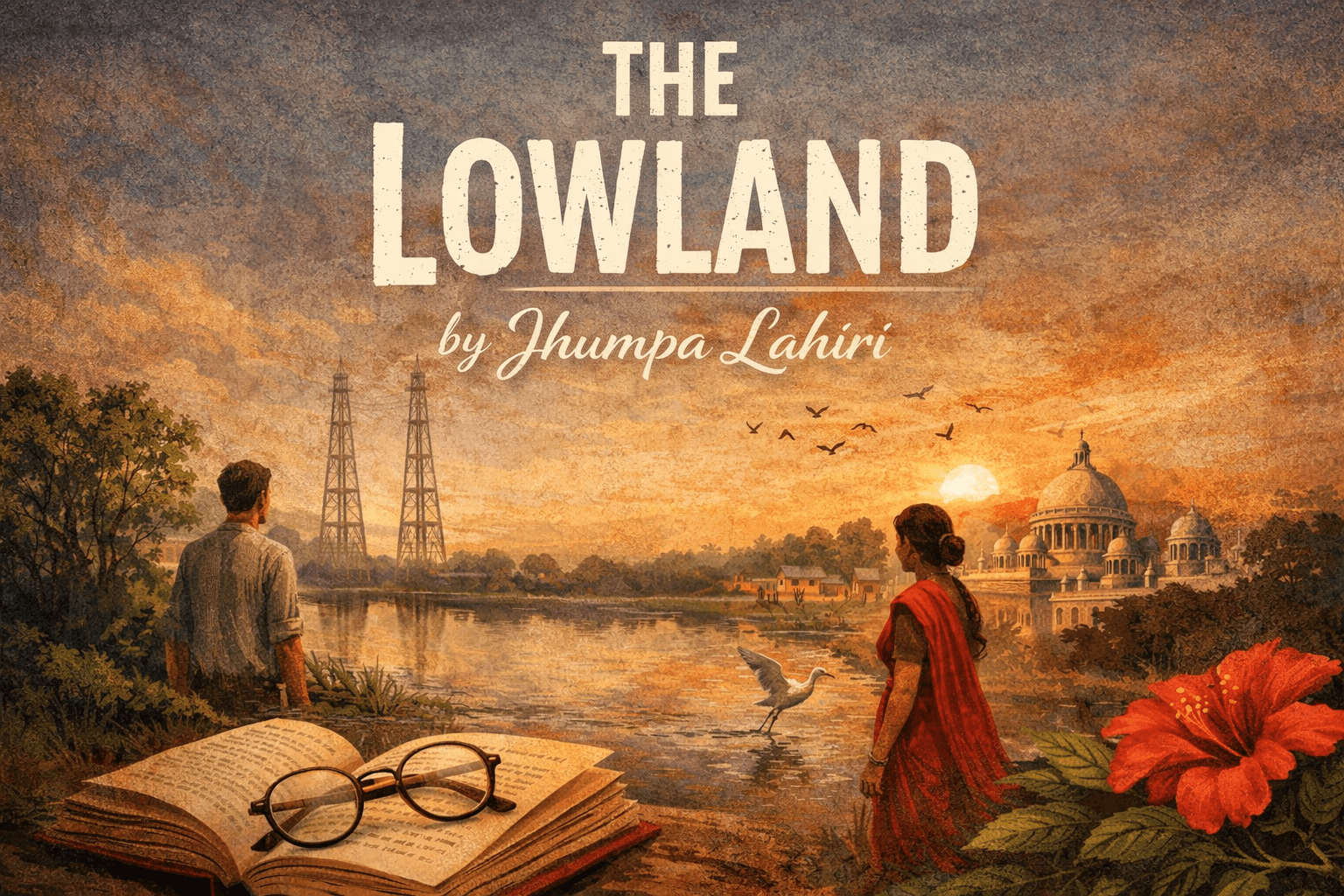
A few years ago, I wrote about my superstitions with books – how I believed that a book finds you when the time is right. My latest read reminded me of that and I went digging for the article. And to my surprise, I had mentioned the very book in the article. Jhumpa Lahiri’ s Lowland was a gift from a friend. It was given to me in 2014. The book traveled with me from India to the UK and stayed with me the whole year. Although I did try reading a few pages, I couldn’t finish it. So, it came back to India with me and stayed the next 10 years on the shelves. Unlike the friend who gifted it, it moved with me across cities, houses and shelves.
A few days ago, I picked the book hoping to have a lighter read after my experience with Svetlana Alexovich’s The Unwomanly Face of War. Soon, I found myself engrossed in it, sometimes reading it under my phone’s light while travelling. Strangely, I had done the exact thing with Jhumpa Lahiri’s Namesake. With every page and chapter, I was constantly convinced that the book had to wait because I wouldn’t have handled all the emotions that it stirred back then.
The story begins in Tollygunge, with two bright young brothers – Udayan and Subhash, who like many Indian sons proudly shoulder the aspirations and ideals of their family. Then comes the idea of a ‘revolution’ which later grows into the Naxalite movement of West Bengal. What began as a seed of thought turned into a monstrous nightmare in the lives of these brothers and everyone they held dear. It is no wonder that the story is relatable even if you haven’t lived in those times of Naxalbari, because life confronts us with such upheavals in different forms.
What I loved most was how beautiful the characters are shaped – each one deeply human and full of vulnerabilities. I was moved by the weight of responsibilities that Subhash carries as the elder sibling and loneliness that follows. I was angry at the betrayal that someone as ideal and dedicated as Udayan had to suffer, how easily such people are forgotten. Then, there is Gauri, the woman who was ahead of her time and yet couldn’t find her peace. Above all Bela, who bears the consequences of choices that she never made. I found myself weeping many times throughout the book. I wept with each one of them. I wept for each one of them.
The friend who gave me the book left a note that said, I remind her of Jhumpa Lahiri. That is such high praise, because Jhumpa writes beautifully. There is a strange subtlety and quiet in how each writes. Even the most heartbreaking moments unfold without any drama. Just as in real life. How death comes quietly on a lazy afternoon and we leave without getting to finish all the things we were planning to. And how life goes on, even without us and our lofty plans. That is what makes this a very intimate read.