As Kerala’s Palm-Lined Beaches and Backwaters Call You Again, Stop by My Panamanna

The much-needed COVID vaccine is almost within reach for the masses. In a few months, the roads, seas, and skies will open, providing the lifeline that the global tourism industry, decimated by COVID 19 and sputtering on life support, desperately needs. This is also one instance where patience does not fall under virtues. The industry, understandably, is impatient to welcome customers with open arms, and with little to no restrictions. Their wish is about to be granted. The demand for business and leisure travel has never been higher. While the pandemic has destroyed the livelihoods of millions, there are several sectors that have been relatively left unharmed, and people associated with those sectors have not really seen a dip in their earnings. Add in the wanderlust that is encoded in human DNA, the proverbial floodgates are about to open. There is no time like now to start planning for the next adventure, and with that, comes the biggest question: What should be my first travel destination in 2021? For me, it is a small village in Kerala.

Panamanna – My Home in Kerala

The decision, quite frankly, surprised me. Until ten months ago, I was a proud member of the frequent flier community, thanks to my profession. My job allowed me to fly on a weekly basis, to some of the world’s most popular cities. Then COVID19 happened, and like everyone else, I was grounded. Since the news of an approved vaccine broke out last month, my excitement to fly again has been building up. I vividly remember the giddiness during my maiden flight from Delhi to Chennai 21 years ago. Something tells me, my first flight of 2021 will invoke similar emotions. Since last week, I have been making a mental list of all the places that I want to fly back to, once normalcy resumes. Some have the best food and breweries. Others are known for their architecture, skyline, or beaches. As I was making this list, one place kept pulling me harder than any other. My village of Panamanna under Ottapalam Taluk in Palakkad district of Kerala.   The reasons are amazingly simple. Pure nostalgia, being frozen in time, and a sense of being one with mother nature. I guess, one must be from Panamanna to get these feelings. If I add the number of days that I have spent in Panamanna, from the time I started remembering things. it still would not be enough to make two full years. Even then, I am unable to resist that strong pull. Not that I want to try.

A view from author’s front gate. A wide stairway built with laterite stones, and lined by coconut and betelnut trees, leads to a narrow pathway to the rice fields. A similar stairway on the opposite side leads to the pathway to the village.

How the Gods Designed Kerala

Kerala has over 600 kilometers of shoreline with many famous beaches and backwaters. Panamanna, however, is inland. It is a part of Palakkad District, which is known as the Rice Bowl of Kerala. The entire district is full of lush green rice fields and family-owned plantations that grow rubber, coconut, betelnut, mango, spices and Teak among other things. There is no shortage of water bodies, or rain for that matter, to meet the needs of this farmland, and Panamanna is no exception. A Thodu (local word for a river tributary) slithers across this village, like a gigantic snake, eager to merge with the Bhartappuzha river. In the dry summer months, this thodu is a harmless stream with ankle deep water that is pristine and clear. Most villagers now have a two-wheeler or a car but just until recently, the entire village used to walk through the rice fields and cross the thodu to get to Ottapalam, the nearest town which is a few kilometers away. This shortcut shaved off over five kilometers between the village and the town, so it was a well-travelled route during day or night. The only other option for the residents was to wait for one of the three private buses that came at specific times during the day. If you missed one, you had to wait a few hours for the next. Another option was to hop on an occasional autorickshaw that was heading back to town after dropping a passenger. Those were also rare back in those days. Most people just walked. As teenagers, my cousin and I used this shortcut to sneak into the town, to buy and smoke cigarettes since smoking in the village where everyone knows everyone would be foolhardy!

The wet months create a whole different set of challenges. Monsoon lasts for almost six months in Kerala. It gradually builds up before tapering off. During the first couple of months, the stream is still shallow enough to cross. I remember, all someone had to do, was fold their Lungi or Mundu (reserved for formal occasions), lift their Saree or Pavada (worn by younger girls), hold their leather sandals in one hand, umbrella in the other, and walk across! It was a true skill to be able to do all this while crossing the stream and trying to stay dry! As I type this, I can picture the cold muddy water running past my legs, the undercurrent trying to trip me, as I attempt to cross. Growing up in the north, I was used to shorts and jeans. Wearing mundu was a novelty, one that I truly embraced. Even today, when I fly to Kerala, I only pack two pairs of Jeans. Mundu is my outfit of choice for the duration of my stay. The first few years, I struggled with the whole process of folding my mundu, holding my sandals and umbrella while trying to cross that stream. As the years went by, I became skilled at this whole process.

Floods and Floodgates of Emotions

Some years, as the rains continue to pummel the region, this once shallow stream, suddenly and with no warning, transforms into a nasty raging force that breaks its banks and floods the entire village. Acres of crops are destroyed. The whole valley looks like a giant muddy lake. Thankfully, most of the houses in the village are built on hills that surround the rice fields, or on elevation, so the damage from flood to the houses is minimal. It is usually the incessant rains that destroy the tiled roofs. Animals and even humans sometimes, do not understand the deceptive forces of nature. The narrow embankments and even the main road that was visible to human eyes just a few minutes ago, become blurrier or worse invisible during sudden flash floods. Next thing you know, you are being swept away. There is not a single family among the original settlers in Panamanna, that has not lost a bovine, a pet, or a human, to this deception in the past few hundred years.

My mother, as the only kid in the family who could not swim, was one of the lucky ones who survived and lived to tell the tale. An infamous village drunk, who by sheer luck, happened to see her getting swept away, quickly dove in to pull her out and saved her from a certain death. I never met him, and he had been dead for decades, when I first heard this story, but the legend had lived on in the village. Every now and then, someone in the extended family would bring the story up during our stay, and my mother would laugh it off. I do know that she is grateful to that old drunk to this day, and probably says a silent prayer for him each morning.

Kolams and the Feudal Era

When I think of water bodies, I cannot skip mentioning the Kolam. Kolam, the Malayalam word for pond, is a staple of rural Kerala. Every major temple has one for the devotees to bathe before the Darshanam, and so do most of the older Nallukettu Veedu (traditional Nair and Namboodiri Brahmin homes built with Laterite stone and wood, with a courtyard in the middle). The oldest properties have two ponds. One built indoors, was usually well maintained for the family’s private use, and the second one was built closer to the fields for use by the farm animals and farmhands, a reminder of the feudal era when the Nairs and Namboodiris controlled every aspect of social life in Kerala. This was also used for washing clothes. I distinctly remember, waking up as a lazy teenager, to the sound of wet clothes being banged against one of the rocks installed next to the pond and specifically flattened out for washing clothes. Many of these ponds, now largely unused since the introduction of farm machinery and washing machines, have been run over by an overgrowth of water lilies and lotuses. Surrounded by tall and slender coconut and betel nut trees, these ponds with their flowers in full blossom, further enhance the already beautiful landscape. The entire Palakkad district is abundant with these beautiful properties. Therefore, so many Malayalam movies from the eighties and nineties were shot in these villages. These movies focused on Natumpuram Jeevitham (life in the countryside) and Pazhankalam (medieval glory days), and these properties offered the perfect setting for the story that the director wished to capture through his lenses. The annual maintenance cost of these houses, some of which are now hundreds of years old, is not cheap. The current homeowners, descendants of the feudal lords who had been stripped of their vast lands, wealth and status during the Sixties’ Land Reform acts enacted by the first Communist government of Kerala, were only happy to lease these houses to movie producers for what was considered as lucrative sums in those days. Some of these houses have now been permanently rented out to movie studios.

Food and Alliances

Panamanna is certainly not a melting pot of global cultures or cuisine. The place, however, has the best food in my humble opinion. There is no shortage of family recipes that are unique to the village and passed down the generations. Most of the original families living here, have been neighbors for over a century, perhaps more! Nairs of Kerala and the Khasis of Meghalaya are the only two matriarchal societies in India. Traditionally, in the Nair community, a woman inherited her family’s wealth and lands, and became the landlady. Additionally, Nairs also practiced the now almost extinct custom of Morapennu (wherein a Nair boy married his maternal uncle’s daughter and the couple lived and raised their family in her ancestral house). There are many theories proposed by modern historians and anthropologists regarding the traditional Nair society. One theory is that the custom of women inheriting her ancestral property, was practiced because the Nairs were a warrior clan, where the men were always fighting or waging wars with other kingdoms, and women needed to not only run the household but also supervise the domestic staff and farmhands that either worked as free, or indentured labour.

With regards to the practice of Morapennu, the theory proposed suggests that this custom of marrying first cousins was established simply to ensure that the family wealth and assets stayed intact in the family, and that the bloodline stayed pure. Whatever the reasons may have been, these customs contributed to women empowerment and women camaraderie that has been fostered over centuries in the Nair community. I tend to believe that this bond shared between women across the village is what has led to the creation of a few dishes and recipes that are utterly unique to this village. As someone who has traveled a lot, and has tried authentic cuisine from every continent, I can confidently say that a simple dish like Karapara (a crepe made from left over rice battered and mixed with various lentils and spices and served with onion chutney)tastes better than any dosa that I have ever eaten. These dishes always, without fail, get me to gastronomical heaven. What makes it even better is that these recipes are so uniform across the village, that I could try the same dish prepared by my mother, an aunt, or a neighbor living on the other side of the village, and still could not tell the difference!

Speaking of differences, something that I am absolutely craving, is a bottle of Nadan Kallu which loosely translates to country liquor. Yup, as the connoisseurs of adult beverages reading this would attest, the best destinations are those that have good alcohol! I am a lover of scotch. Single malt scotch from the Highlands to be specific. I will drink anything in a social setting but when I am by myself, and wish to unwind, it is always a glass of scotch that gets the job done. That being said, I am a sucker for a good nadan kallu, or Toddy to be precise. The kallu is unlike any alcohol that you will ever drink. I credit my grandfather for getting me hooked on this, even though the poor guy had no idea that he unknowingly introduced me to Toddy. He was the only man who has left indelible impressions on me, and one of those impressions was his habit of drinking toddy. Making toddy from palm tree sap, is a centuries old skill that is a dying art. When I was a kid, I used to watch this local farmer sell fresh toddy to my grandpa. I always emulated him and wanted to be like him when I grew up. One day, when he was not around, I got my chance to take a sip from his toddy pot. Let me tell you, it is an acquired taste. The initial disgust at that moment has turned into a lifelong love for the taste. While some licensed liquor stores do serve toddy, the real deal is found only in the village, and I cannot wait to get my hands on a bottle!

I have so many fond memories of my summers spent in Panamanna. Living in a town where coal was abundantly available to generate power, I was spoilt. We rarely lost power where I grew up. On the other hand, electricity had not reached Panamanna in the early nineties, even though the electric poles had been installed on all streets, and wiring was completed to all houses in the early eighties. They just “forgot to turn the power on” for over ten years. There is a shining (pun intended) example of corrupt and careless governance for you! Folks in the village relied on Vallakku, which in Malayalam means lantern. There are many types of vallakku. Petromax was the most popular and trendy brand of pressurized paraffin lanterns. Some families also used the regular vallakku, which was a kerosene wick lamp. Then there was the original Vellakku. These have been used in Kerala for centuries to illuminate homes as well as temples. Fueled by sesame seed oil, called Nella Enna which means good oil in Malayalam, this vallakku is considered Shudham (pure).

Lack of streetlights meant that while walking through the fields and plantations, villagers used either a battery-operated flashlight or a homemade Choottu, a type of torch made from burning dried coconut leaves tied together like a broom and soaked in oil, another one of the many uses of the coconut tree. Like the Neem tree in the north, the coconut tree is a gift of nature that keeps on giving! The mud embankments that separate the fields, and used as walkways, are also a fertile ecosystem for snails, crabs, frogs, and their predators, the snakes, many of whom are highly venomous. People back then, traveled with both a torch, and a stick, that they used to tap on the embankments to scare away any unwanted reptiles. On moonless nights when it was pitch dark outside, I could see these traveling lights from a distance. Looking back, I wonder if the local ghost stories about flying lanterns suddenly disappearing in the farms, were simply the product of someone’s imagination!

Memories and an Invitation that Never Expires

Summer nights can be brutal in Kerala even though the temperature cools down a little. It can still be unbearable at times. I somehow became immune to the heat because of the people I got to spend time with. Back in the nineties, joint families were the norm in Panamanna. There was no shortage of cousins to fight and play with. An icing on the cake was neighbors showing up for dinner and drinks with my grandfather. There was always extra food for an unexpected visitor or two. The village was going through a spike in crimes those days due to rising unemployment. Burglaries were common, so all the men slept outside, armed with Vadi, a type of homemade baton and Arivalu, a sickle used in farming, Sometimes, the neighbors joined us, which turned into one big sleepover. Occasionally, we would hear a loud whistle, almost like a howling, a unique sound invented by the villagers called Olli. This was everyone’s cue to quickly get out of the beds and pick up their vadi and arivalu and run towards the sound! The hills surrounding the fields in Panamanna create a natural echo chamber which acts as a sound amplifier. Someone who thought their house was being robbed, or someone who feared that they had heard unwanted footsteps or noise in their yard, would make those howling sounds and everyone else from the neighborhood would run towards that sound. Most times, it was a false alarm but at least on three separate occasions during my stay, we hit the jackpot! While no one dared used the sickle, villagers did not mind meting out their own form of justice to the robbers with the vadi. The person(s) caught was tied to a tree or a pillar and was given a good beating. The elders ensured that the mob did not get out of control before the authorities showed up. Imagine my excitement as a teenager running with my cousins and uncles to catch a robber! Where else could I find that thrill?

Every house in Panamanna now has power, modern facilities, electronic gadgets, smartphones and vehicles. All the streets are now well lit. Numerous new families have moved in, so each time I go back, I see new faces and make new acquaintances. A lot has changed over the years, but some things have stayed the same, the most important one being my love for the characters and stories that shaped my early years and youth. I spent most of those years in the east, and consider myself a proud product of that environment, but sprinkled, somewhere in there, are a few traits, that I acquired during my short stays each year in Panamanna. 

I think of it as a short documentary that still leaves a lasting mark on you. Most of the live characters from my documentary have either gotten old or passed away, but their memories and my time spent with them, will forever be etched in my heart. I get to go to Panamanna every few years, sometimes every couple of years if I am lucky. The last time I was there, was in 2018. A trip is long overdue! Usually, someone is there to pick me at the airport, but sometimes I arrive at odd hours and just get a cab. The ride from the airport to Panamanna is over three hours and on roads that take no pity on your back. It does not matter if I am exhausted from the long journey, or if am in a stranger’s vehicle, or driving with my folks sitting next to me, the moment the vehicle makes its first turn towards the road that leads to my village, there is this inexplicable feeling of bliss that washes over me. All the fond memories come bubbling out to the surface. My heart rate goes up, and a smile comes to my face that stays for days, and only fades when it is time to say goodbye. I honestly do not know if it’s just separation anxiety, or the child within me, trying to relive the glory days. I do hope that I never find out the answer. Why ruin magic?

Cover Image: Image by ejakob from Pixabay
Article Images: Shashi Nair

Like what you just read? Become TheSeer Insider. You will be receiving one letter from us every Friday to help you spend a more mindful day and make the best of your weekend. Enter your email id below and click on subscribe. We won’t spam you, ever!

The January Harvest – Books to Read This Month for a Festive Start to 2021

2021 Read Along | A Monthly Reading List by TheSeer and Bangalore Reading Club

It’s the new year around the world. Closer home, it is also the harvest season. Harvest season means festivals, and not one but almost as many as the number of states in our country. Not surprisingly, we are dedicating the month of January to reading more about our festivals. After a 2020 everyone wants to forget, we bring you that much needed cheering up. Most of these festivals are celebrated to mark the first day of transit of Sun into Makara rashi (Capricorn), marking the end of the month with the winter solstice and the start of longer days. To name a few, Magh Bihu in Assam, Maghi (preceded by Lohri) in Punjab, Haryana and Himachal Pradesh, popular amongst both the Hindus and Sikhs, Sukarat in central India, Thai Pongal in Tamil Nadu, Ghughuti in Uttarakhand, Makara Sankranti in Odisha, Karnataka, Maharashtra, Goa, West Bengal (also called Poush Sankranti) and Uttar Pradesh (also called Khichdi Sankranti) or simply as Sankranthi in Andhra Pradesh (also called as Pedhha Panduga) and Telangana, Tila Sakrait in Mithila (Bihar). While you await the aroma of freshly prepared range of delicacies of til (sesame seeds) and jaggery, here are the books that you can read about our harvest festivals, their origin, and what differentiates them from all the other festivals of the year.


Bihu Songs of Assam – Prafulladatta Goswami

Bihu is a set of 3 festivals of Assam – Rongali or Bohag Bihu, Kongali or Kati Bihu, and Bhogali or Magh Bihu. Rongali Bihu is celebrated in April, Kati Bihu in October, and Magh Bihu in January. Like any other festival in India, songs are an integral part of the celebrations. This book by Prafulladatta Goswami is a collection of 262 Bihu songs collected as early as 1921. These were first printed in 1934. The songs are in English and also presented in the original Assamese text. You can buy the book here. Interestingly, there are several other books from the same author on Assam and its people, if you want to read more about the state.

Vaadivasal – C.S. Chellappa

Thanks to the 2017 pro-Jallikattu protests in the face of a possible ban on the celebration around the festival of Pongal, many more people now know about this unique tradition of Tamil Nadu. However, the news media has only scratched the surface. To understand more about the tradition of bull-taming and finer details of the rituals around it, read this fine piece of literature written by C.S. Chellappa. The book is available in both Tamil and English.

Kumbha: The Traditional Modern Mela – Nityananda Misra

Any mention of India is incomplete without the mention of Kumbh Mela. The festival attracts devotees and tourists from around the world. This festival is celebrated in a cycle of 12 years at four river banks pilgrimage sites – Prayagraj, (Sangam of Ganga, Yamuna and Saraswati), Haridwar (Ganga), Nashik (Godavari), and Ujjain (Shipra). If you have never been to one, you are missing out on one of the most scintillating visages in the world. To know more about this festival, check this book out Kumbha: The Traditional Modern Mela by Nityananda Misra provides a comprehensive look at the largest human gathering on earth. Some news – the dates for the 2021 Mela have been announced already. Pack your bags and don’t forget to put this book in there.

Kite Journey through IndiaTal Streeter

If you talk about the harvest festivals and you don’t mention the kites, you are having only half the fun. Kites are an intrinsic part of these festivals across India. So how about reading something about the culture of kite-flying in India? American sculptor Tal Streeter delves deep into the kite flying traditions of India and comes up with a lot of interesting tales around kites. For the book, Streeter also visited the kite producing centers as Lucknow, Jodhpur, and Mumbai and also covered Ahmedabad, where each year more than 10 million kites are destroyed in a month-long kite flying festival. Now that should make you pick a copy right away. Buy it here.

Do you have other book recommendations for the festive spirit of January? Tell us in comments. Also, we will be back in February with a new theme and a new set of recommendations.

Become TheSeer Insider. Join our #BetterThanYesterday family. You will be receiving one letter from us every Friday to help you spend a more mindful day and make the best of your weekend. Enter your email id below and click on subscribe. We won’t spam you, ever!

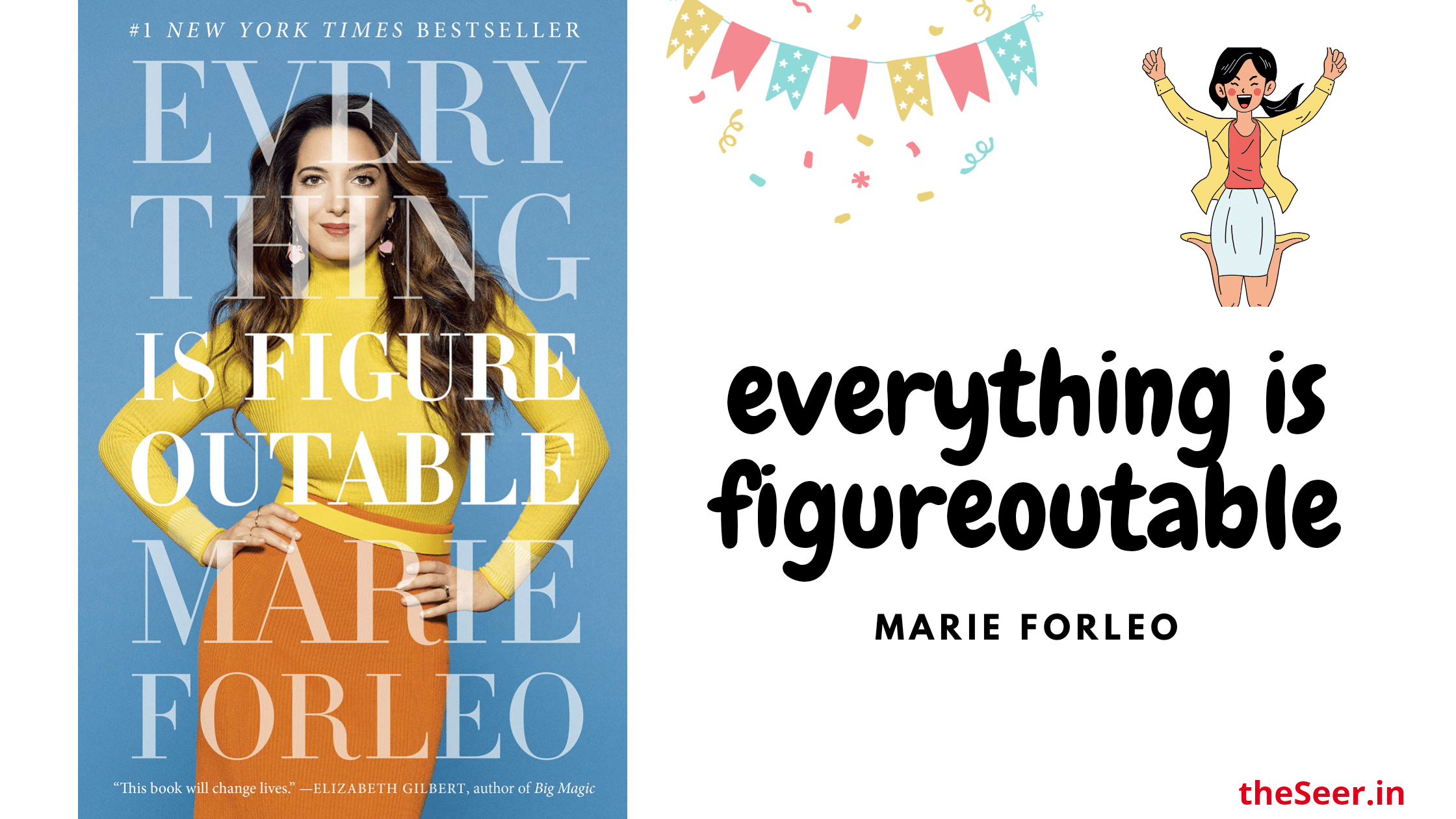
Everything Is Figureoutable by Marie Forleo Has All the Sunshine You Need to Kickstart Your New-Year

At least in India, our entertainers still have some time to go before they can get rid of their obsession for pessimistic realism. From the millions of episodes of reality television shows to creating gloomy pieces of art and cinema, we are being served hopelessness and negativity every day in the name of realism. Add to the mix, the pandemic of news media, the common man is forced to feel vulnerable and powerless with every primetime broadcast. Not to forget, our own magnetic attraction to all things negative makes us the perfect guinea pig in the laboratory of so-called ‘realism’.

Naturally, it always takes much more force and motivation to stay positive and hopeful in today’s age. With business models created to make us lazier and more worthless every passing day, people have begun to lose control of their lives as early as their toddler phase. Contrast this to our parents and their parents, things were more complicated than they are now. They didn’t have access to google to look up for ‘how to make myself dumber’ every time they had to do something. However, they perhaps lived a more complete life than many of us are living now. They knew how to fix things. Even if they didn’t, they didn’t tap on a screen to get things done. They tried and learned. This is where Marie Forleo’s wonderful book ‘Everything is Figureoutable’ begins with a chapter on her mother who could figure out just about anything. Here’s how she begins –

“My mother has the tenacity of a bulldog, looks like June Cleaver, and curses like a truck driver. She grew up the daughter of two alcoholic parents in the projects of Newark, New Jersey. She learned, by necessity, how to stretch a dollar bill around the block and is one of the most resourceful and industrious people you could ever meet. She once told me she rarely felt valued, loved, or beautiful, but she held tight to the promise she made to herself that, once she was old enough, she’d find a way to a better life.”

It makes sense. When I observe the lives of people who are now in their late 50s and beyond, each one appears to me as if they were books to be read cover to cover and as they pass away without telling their story, it feels like a library getting ransacked in a siege laid by time and the modern man’s self-obsession. Enter COVID-19, and the entire process gets fast-forwarded. It is indeed depressing to be an audience to this pandemonium.

With all the bad things happening around us, I was looking to read something that shines some sunlight towards the end of the year. This is when I found Marie Forleo’s ‘Everything is Figureoutable’ – a phrase she has loaned from her mother and inspirer-in-chief. Guess what, this book was exactly what I was looking for. Marie Forleo is a ‘multi-passionate’ entrepreneur, author, and philanthropist. She was named by Oprah Winfrey as the ‘thought-leader for the next generation’. The introduction will take up the whole page if I go on about her achievements and how she inspires millions around the world. Coming back to the book, Marie draws from her own life experience, her personal as well professional journey, her hits and misses to compose a transformative book for her readers.

There are chapters on the magic of belief, befriending fear, the suicidal road to perfectionism, the myth of ‘I’m not ready’ or waiting for the right time. These chapters are full of practical suggestions and instructions laced with homour and anecdotes to keep you engaged. As a result, you gain something from every page of this book. There is not a dull moment, thanks to Marie’s conversational style of writing. It feels more like a personal session with the author herself. One of my favourite sections of the book is about how the modern day products have turned ‘us’ from being consumers to becoming products. She underlines the damage social media and all the insta-gratification tools and apps are doing to us. That is only the first half though, she also comes up with exercises and activities to help the reader fix this problem. And these are very doable if you want to put your mind to self-improvement. I am writing this review more from the perspective of a beneficiary of Marie’s ability to stay positive and spread it around her than merely jotting down a plain-old book review. The book is also interspersed with testimonials (field-notes) from her readers who have benefitted from the book and are so powerful that a collection of those stories can make a great book in its own right.

2020 was a year of harsh realities for most of us. People died, plans stalled, and businesses shut shops. But was it all as dark and negative as we want to think it was? Well, many got a chance to reconnect with their family. Many people I know went on an online certification spree to upskill themselves. Some of us learned a new language. Many came out fitter physically, mentally, and spiritually out of these serial lockdowns. There are certainly a few positives to count, no matter how sparse they are. Marie’s life and her book tell us exactly that without the ‘preacher mode’ on. This definitely makes the book a recommended read to begin your year with some more light around you.

Tales from the Himalayas by Priyanka Pradhan Takes You on a Nostalgia Date With Your Childhood

Someone pushed gently at our gate and my husband rushed to check. I saw his face light up with a smile and he was wishing our visitor a happy new year. Our visitor was hardly bothered and babbled away in her merriment. She and my husband have been trying to befriend each other for a while now. I played the observer. The only part of the conversation that I understood was when she said ‘Oh My God’, although I have no idea what made her say that. “Children – theirs is a world of bliss. Won’t it be wonderful to be a child all again?”, I thought to myself. So, the universe conspired later in the day to grant me the wish. Except there was a twist. The wish came true in the form of Priyanka Pradhan’s ‘Tales from the Himalayas’.

As an adult, we tend to oversee the various emotions that fill the world of a child and paint them all in the colours of carefree joy and playful innocence. The book reminded me of how wrong I was. While their world is a lot simpler than ours, they too experience a whirlwind of emotions. Priyanka Pradhan makes us relive at least some of those different emotions, joy included, in her book ‘Tales from the Himalayas’. 

The book, published by Rupa Publications, is a collection of 17 short stories based mostly out of Kumaon, Uttarakhand. Some stories like ‘Kafal’ are inspired from age-old folklore. However, some of them do sound contemporary, especially the ones that touch upon social issues. The story ‘The Villain’ for instance reassures the dark-skinned Kisna to be comfortable in her own skin. In ‘The Bagpiper’ Priyanka encourages little Paru to defy the tradition that doesn’t allow girls to play the masak-been from the bottom of her heart.

Stories like the ‘Daak Ghar’ and ‘The Village Monster’ remind me of those days when I would be terrified to go alone into the kitchen at night for the fear of ghosts. 

Priyanka introduces her readers to the hills, the birds, the berries, the songs, the food and the very culture of this Himalayan state. While ‘Haria’s Kitchen’ made me hungry for all the delicacies of Kumaon, I liked how cleverly she employed the narration to acquaint us with the Choliya dancers with their swords in ‘Holi’ and the famous song of Kumaon in ‘The Spring Song’. She also draws inspiration from history and brings to us the stories of Indian explorer and surveyor, Nain Singh Rawat and Gaura Devi of the famous Chipko movement.

The memories of  our childhood are never complete without our grandparents. So it is only natural that grandmothers and grandfathers make their presence felt in ‘Tales from the Himalayas’. The award-winning ‘Postcard’ especially is quite heartwarming. My favourite, though, is ‘The Long Lost Friends’. It reminds me of how everyone’s childhood is not the same yet most of us have been happiest as a child.

All the stories leave a moral for children and adults alike. Mohit Suneja’s illustrations add colour to this beautiful ride through the mountains. I couldn’t have asked for a better book to start the new year with. Go for it, for the nostalgia that it promises. More so if you are a parent because here is a book to bond over with your child.  

Syed Muhammad Ashraf’s ‘The Silence of the Hyena’ Is a Commentary on the Wild Side of Human Behaviour

Animal fiction is an intriguing genre in literature especially the ones that are written for adults. Be it Orwell’s Animal Farm or Perumal Murugan’s Poonachi, these works do not merely stay as works of fiction. They, instead, go on to serve as a commentary on society and its ironies. Syed Muhammad Ashraf’s ‘The Silence of the Hyena’ is one such commentary on human behaviour. Written originally in Urdu, the book is a collection of short stories and a novella translated by M.Asaduddin and Musharaff Ali Farooqi.  

Syed is one of the most prolific contemporary Urdu writers and also a Sahitya Akademi award winner. His works are known to be a poignant portrayal of the marginalized. ‘The Silence of the Hyena’ is no different and bears testimony to the pathos and deep sensitivity that his works carry. Interestingly all the animals in these stories are ‘wild’ and therefore, a sense of impending danger prevails over most of the stories. For instance, in the story title ‘Rogue’, where three men go out to hunt a rogue elephant on a winter night, you can almost feel a chill in your spine.

Happening at the edge of a forest, these stories, on one hand, depicts a day in the lives of people and their encounter with the wild beings. However, the symbolism in most of the stories is too hard to miss, especially the ones with the Hyena. Real horror begins when the difference between man and animal blurs and you can’t say who is who. In the story, ‘ And then laughed The Hyena’ when everyone in the family walks with a ‘chat-chat’ just like the hyenas, you are thrown into a world of eerie surprise and you end up reading it again to ensure you are not delusional.

‘Death of an Antelope’ and ‘The Vulture’ sound more like fables. While the plots of these stories are quite obvious and they lack the usual layers that exist in all the other ones, they are still enjoyable. They give you a break from all allegories and metaphors. Nevertheless, these too keep you brooding. The stories, ‘The Silence of the Hyena’ and ‘The Last Turn’ are intricately layered in their narration and divulge the hypocrisies in human behaviour. However, my favourite one among the short stories is ‘Separated from the Flock’. A heart-wrenching tale based on the Indo-Pakistan partition in 1947, it talks about the trauma of separation, the grief of the migrated, their broken wings and homelessness.

The last part of the book is the Novella ‘Beast’ – the story of village administrator Thakur Udal Singh and his wild bull Neela. A critique of the oppression of the marginalized and organized crime, this feels a little too stretched in places. The similarities between Thakur and Neela are anything but uncanny and their end seems befitting. But too much is lost before the end arrives, thanks to the terrorizing duo.

While the animals and more so the humans from the stories instil fear in you, Syed offers you some respite in the form of nature. Since all the stories are based on a rural setup, Syed makes sure you walk through the sugarcane fields, watch the sunset, and wake up to a frozen lake.  While I will never know how the original work in Urdu sounds, the translated prose certainly reads beautifully. If you are ready for some pondering and re-reading until you find all the answers, this is the book for you. And did I mention that I loved the cover of the book too?

BLF2020 | When the Headline Is the Story – Amandeep Sandhu, Neena Gopal and Nirmala Govindrajan With Aruna Nambiar

Writer and editor, Aruna Nambiar was in conversation with Neena Gopal, Amandeep Sahu and Nirmala Govindraj. A journalist for thirty-seven years, Neena Gopal is also the author of ‘The Assassination of Rajiv Gandhi’. Amandeep Sahu has authored two novels, of which ‘Roll of Honour’ was nominated for The Hindu Prize 2013. Journalist and social sector documentarian Nirmala Govindarajan’s new novel ‘Taboo’ has been shortlisted for the Rabindranath Tagore Literary Prize, 2020. As Aruna pointed out, the one common thing among these three authors was that their books were all inspired from their real life experiences and the subject of their books have been burning the headlines for months together.

The three authors then spoke of their experiences that shaped their lives and writing.

Neena Gopal went on to talk about the persona of Rajiv Gandhi, his last interview with her and the happenings of the day when he was assassinated. She also briefed on consequences that followed. Aruna also asked her of the various conspiracy theories around Rajiv’s assassination. Neena thought that although the blame was pinned on the LTTE there was more to it than what met the eye. She spoke of how Rajiv overturned every decision that was made by Indira Gandhi and how it was a grave mistake to send Indian troops to Sri Lanka. She also opined that Rajiv was probably tricked by Jayewardene who used Indian forces for his own political ambitions. She mentioned how all information about LTTE’s role in the assassination of Rajiv came from Ranasinghe Premadasa and SITs mess up with Sivanesan’s arrest in Bangalore. She also spoke of Rajiv’s meeting with General Zia, the back-channeled peace talk with Pakistan and that Mossad and CIA did not see India as a friendly nation. Speaking of Rahul Gandhi, she said he has a long way to go and agrees with Aruna that he shouldn’t be referred to as a ‘young’ leader anymore. 

Amandeep Sahu spoke of Punjab, his family, his personal experiences as a boy in the midst of a political hellfire.When asked about how some paint him as a supporter of the Khalistani movement, Amandeep explained that it’s the work of trolls. Amandeep has been very vocal in his support for the ongoing farmers protest and that has irked some right wing supporters who call him pro-Khalistani. However, the translation of his novel ‘Roll of Honour’ in Punjabi titled ‘Gwah De Fanah Hon Ton Pehlan’ has been received well by all factions of Punjab. This is despite the fact that  the book is critical of the political machinery and various religious institutions of that state. Speaking of the farmers’ protest, Amandeep says that it has brought Haryana and Punjab along with the various ideologies within Punjab. He also went on to explain how the centre cannot arbitrate on a state subject. Amandeep insisted how with his writings he wanted to change the current political narrative that demonizes Punjab.

Nirmala then spoke of how she first came across child labour, sex trafficking in Odisha and rural Jharkhand and how that changed her life for ever. She also spoke of her experience with young women in Ooty and Kolkata who were rescued from sex trade, the developmental work being done by various NGOs in these region and how the individuals she met in these places inspired  her work. According to her no political party stepped into these areas and the plight of the tribal people she worked with had changed her opinion about reservation.

Aruna who had recently read Nirmala’s Taboo said she expected the book to be sombre and bleak given the seriousness of the subject. She was surprised to find it rather whimsical and that it made her smile. Nirmala in response said that the idea of writing fiction is to move away from reality to create the alternate reality. Also in her opinion, these girls and women, despite being survivors exude so much positivity that one can write nothing but a whimsical tale of them. When asked about how some of her characters seemed to have been inspired from the current political landscape, Nirmala said that her writings and creations are reflections of what she sees across the country. So her work is a satire on the political state of the country and not merely on sex trafficking. Nirmala also mentioned that her next  book is also a women-centric subject.Her advice for anyone who aspires to write such sensitive subjects is that they must feel strongly about it to be able to talk about it.

Ruskin Bond’s How to Be a Writer Is the Ideal Comfort Book to Sign off 2020!

Humour. Compassion. Perseverance. A zest for life. Choose anything written by Ruskin Bond and you’ll find enchanting themes interwoven in his musings on love, survival, nature, childhood and adolescence, romance and even the ghosts that quietly haunt the hills of Mussoorie. Bond is the master of conveying complexity through simplicity, his writings liberally seasoned with dry wit and tossed in a wok of comfort. The emotions that one experiences after reading a piece written by the author are feelings otherwise experienced only in the purest of circumstances; like a cosy nap on a winter afternoon, your favourite food, a lover’s embrace, laughter with friends, mountain trails fragrant with fallen flowers and the smell of old bookstores.

How to be a Writer is a chip off the old block; another loveable addition to Bond’s corpus of heart-warming novellas. Although topical in its approach, the book is a delight! From the beautiful language and distinctive jocularity and down to the adorable illustrations (courtesy of the supremely talented team of Shamika Chavez and Chaaya Prabhat), every little detail is perfect. The aesthetics and interplay of word and drawing will remind you of Roald Dahl’s collaborations with Quentin Blake. Even if you are not interested in writing but have a soft corner for Ruskin Bond, this deserves to be on your bookshelf solely because of the familiarity and warmth it oozes.

Before delving into the nuances of the book, it’s important to know that the book has been marketed as a guide for young readers (some websites have labelled it as a book for children) who want to write and need a few pearls of wisdom on where to start and how to sustain. However, as a 23-year-old, I thoroughly enjoyed the content and learnt quite a bit about the trade and how to keep afloat if one is considering earning a living solely through words. So, don’t be dissuaded by the “childish” appearance or the big font and drawings. It is deeply insightful! Plus, there can never be a Ruskin Bond book that doesn’t teach you a thing or two.

How To Be A Writer takes the reader through the entire spectrum of writing; the qualities that a budding author must inculcate and exhibit, understanding what to write, how to improve that writing, popular themes, building memorable characters and finally, how to approach publishers and commercialize your work. According to Ruskin Bond, there are four building blocks of the process:

  1. To keep writing
  2. Observing
  3. Listening
  4. Paying attention to the beauty of words and their arrangement.

To sit down at your desk and pen your thoughts must be a daily activity. The key is to strike a balance between disciplining your mind to write and knowing when you are done. Bond himself does not write for more than an hour or two daily for any duration beyond that and words tend to lose their freshness. He likens the movement of words to “a stream of clear water-preferably a mountain stream.” The source of the brook is where thoughts are in their purest form and as they flow, one must learn to move around the boulders.

The tonality of the book is graceful yet informal. It isn’t a Do-It-Yourself manual where a leading author shares precise pointers on how to achieve big success. Think of How To Be Writer as an intelligent conversation with a kind individual who has beautiful experiences to share and does so in the friendliest manner possible. At no point does it feel that Ruskin Bond is there to deliver a sermon where he is the higher authority and the readers are supposed to look up to him with dewy-eyes and make furious notes (although he constantly stresses on the importance of jotting notes in a designated notepad when writing a story). He only discusses the insights he has accumulated in an illustrious career spanning seven decades and multiple accolades.

Ruskin Bond shares multiple lessons. Some minor, tucked away in a little sentence; some major – being the focus of an entire chapter. I will attempt to touch upon the latter.

A love for books is imperative. Every renowned author is greatly influenced by the books he/she has enjoyed. Bond says, “Books are essential for the creative mind, and good readers become good writers.” If you are new to extensive reading and not a seasoned bookworm, the author’s recommendations at the end are the perfect start.

Finding a familiar setting is the cornerstone of establishing authenticity. One of the most oft-repeated mistakes that beginners tend to commit is being carried away by the glitz and glamour of places they don’t know and basing their story in an unfamiliar destination. Ruskin Bond believes that one must write about the places you are intimately connected with. Like London for Dickens, rural Bengal for Tagore and the Yorkshire Moors for Emily Bronte. Even fantasy worlds are contextualized in the culture and language of the countries in which they are conceived. For example, Wonderland is very British and Pinocchio is very Italian.

Bond’s take on creating memorable characters is especially interesting. Create immortal characters. Does this mean that characters must defy death? No! What Bond implies is that “some of the most successful characters in fiction are ageless, unchanging.” Think about Poirot, Jeeves, Bertie Wooster, Byomkesh Bakshi and of course, Rusty himself! Year after year, volume after volume, they have remained the same! To be able to keep the essence intact is a duty that needs to be upheld at all costs.

To remain committed to your writing is a difficult task. There is nothing as exasperating as stumbling upon the ill-fated Writer’s Block. Bond admits to not having faced this issue too often because most of his works are on the shorter side. This honesty is comforting. But he does share guidance on the matter. For Ruskin Bond, some of his most famed stories such as The Night Train at Deoli and The Eyes Have It was written in his head and then transferred to the paper. Certainly, this process is difficult to replicate for a lengthier novel. In that case, he suggests taking a break and writing something else to revitalize the grey cells- “A fresh mind will do wonders for a stalled masterpiece.” Finally, if that doesn’t work and you’re sure that your work is useless, choose the dustbin. In his distinctive humour, Bond concludes by saying, “Waste-paper baskets were invented by frustrated authors. And I use one too.

Writing is about expressing your originality, developing a distinct style, telling the right stories and in the end, keeping the faith alive. Patience is a mandatory virtue for people who plan to rely on words to get them through life. Ruskin Bond cautions us about multiple rejections. They will come and don’t signify the end of the world. However, his greater warning is for the lack of persistence and giving up on the very act of writing. The idea is simple, “If you are any good, you will meet with success sooner or later.” How To Be A Writer is old-school, elegant, and mischievous. In other words, worth every second of the holidays, irrespective of whether you’re a writer or just a good ol’ Rusty fan!

You can buy the book here.

Toni Morrison’s Beloved Brings Back the Ghosts of More Than 60 Million Victims of Slavery in America

B-e-l-o-v-e-d, these were the only seven letters Sethe could get engraved on the tombstone of her two year old daughter, letters she thought would be enough. It is the spirit of this dead baby girl that haunts 124, Bluestone Road- a house that had no visitors- colored or white, newspapermen or preachers, speakers or friends. It’s not simply the house they are avoiding but the people in it.

There is little I can write here that can do justice to the experience of reading Toni Morrison’s Beloved. The horror that resides in its pages is not the vengeance of the ghost living in this house or the inescapable past of its characters. It is the horror of slavery, its routine separation of families, sexual violence and dehumanization. When you read Beloved, words can sting, laid bare before you is pain of the sort real people suffered. It is not an easy read, yet it is a novel you must read.

Being set after the end of the Civil War when slaves were emancipated, Beloved has most of its characters looking back to a time when slavery was not outlawed. The narrative opens in Cincinnati, the town Sethe, a runaway slave had escaped to 18 years ago, from the Garners’ farm in Kentucky- Sweet Home, which was neither sweet nor a home. It is repressed memories of Sweet Home that come back to her like  blood gushing from an open wound, when she finds Paul D, the last of the five male slaves that ‘belonged to’ Sweet Home, waiting for her at her porch.

The ghost that lives in Sethe’s house, leaving hand-prints on cake and shattering mirrors is not an evil ghost but a sad spirit. This spirit comes back in flesh as the ghost Beloved, she is an embodiment of Sethe’s past that haunts her and feeds on her. It is Morrison’s incredible literary genius that has given a mythic dimension to the historical and psychological suffering of slavery. Beloved is a historical novel dealing with slavery at its best and worse: the Garners’ patronizing ‘principled’ slavery, Sethe’s mother being a survivor of the infamous middle passage, the School teacher’s violent and abusive slavery which goes to the extent of studying African American slaves as animals; and Mr. and Miss Bodwin, abolitionists whose attitude to slavery presents an irony.

It is a novel dedicated to the sixty million and more who died because of slavery. It tells you about the personal experience of slaves, their lives, something the history of an institution won’t say. At the heart of Morrisson’s novel are separated families, it is the knowledge of Sethe’s separation from her husband that embitters the sweetness of her love for Halle, a devoted son who worked on Sundays for five years straight to free his mother. Baby Suggs’ eight children are reduced to memory. To Paul D and Sethe, whose loved ones are always vulnerable to slavery, freedom is “to get to a place where you could love anything you chose – not to need permission for desire.” Sethe’s fierce love for her children  gives a new weight to the idea of maternal love. As an enslaved woman, she is willing to go to any extent to protect her children from the inhumanity of slavery.

Slavery is an experience that is different for men and women in a patriarchal society and Morrison represents both in all their complexities. The slavery that devalues maternal care in enslaved women by taking away children, degrades men by denying masculinity. Mr. Garner can call his male slaves ‘my men.’ By presenting both male and female survivors of rape, she foregrounds sexual assault as an act of both gendered and racial domination. To Paul D, his not being a ‘man’ is a source of trauma, his memory of feeling less of a man than a farm rooster is both dehumanizing and emasculating. He is a man whose trauma has forced his memories into a tobacco tin heart. Beloved narrates suffering that no one wants to remember.

However, it is also a novel of resistance laced with a glimmer of hope. Sixo is an embodiment absolute resistance to slavery. He fights the white men even when his hands are tied. An old and drained woman, Baby Suggs, who gives up on living life, still continues to look for colour in the house- blue, yellow, and green. She shows little fear of the ghost living in her house. As she says, “Not a house in the country ain’t packed to its rafters with some dead Negro’s grief. We lucky this ghost is a baby…” Beloved is representative of this collective experience. The act of recording this experience is in itself an act of resistance, an attempt to restore the historical record, revealing history to be incomplete if not distorted. A Pulitzer Prize for Fiction, a Presidential Medal of Freedom, and the Nobel prize in Literature later, the significance of Morrison’s writings and its impact on American literature cannot be overstated.

Cover Image: Zarateman, CC0, via Wikimedia Commons

Rumble in a Village Underlines Several Unsolved Problems of Indian Villages Through a Murder Mystery

Indian villages are treasure troves of tales. There are a million stories buried within them, that are waiting to be unearthed. But, it is unbelievable that two foreign research scholars who spent only a year in one of those unrecognizable villages of India could spin such a brilliant tale about it. Palanpur, in the words of Jean Dreze, is a “nondescript village” in Moradabad district in Uttar Pradesh. Jean is one of the two authors of the book, ‘Rumble in a Village’, published recently by Aleph Book Company. He along with Luc Leruth documents life as it was in the 1900s in the village of Palanpur where Jean stayed as a part of his research work. Both Jean and Luc are former scholars from the Indian Statistical Institute (New Delhi) and continue to be associated with India in many ways.

The story begins as a murder mystery which compels Anil Singh, a banker in London to return to his father’s village – Palanpur. The murder is only a premise to take the readers to Palanpur. The main plot unravels after you arrive in the village. The story jumps across different timelines as it traces the history of four families over three generations and the dynamics of three castes – the Thakurs, the Muraos, and the Dalits. What is more interesting is most of the characters lived and some still continue to live in Palanpur. The book retained the original name for some of the characters and even has a photograph featuring a few. 

I must credit the authors for their keen eyes which makes the book a very entertaining read starting from Anil’s train journey to Palanpur. Anil’s experience with the Indian railways will stir quite a bit of nostalgia in the readers. The unusual camaraderie, the unnerving questions from fellow travellers, the droplets of spit that hit your face from the window next are just too familiar. I was amused to learn how the railway station in Palanpur came to be named as Jargaon. The book brilliantly chronicles the arrival of the railways and how it changed the lives of the Palanpuris in some unfathomable ways.

The caste politics and the poverty that the book brings out will not surprise you if you are one of those who were raised in an Indian village. But you will be intrigued to learn what changed and what remained unaltered in this ugly game. While the Palanpuris evolved a little when it came to agriculture, they still preferred to have a temple built before fixing the dilapidated school. I can assure you, this mindset hasn’t changed even in 2020 in many of our villages. The worst part, however, was that the Palanpuris seemed to have remained immovable about educating and empowering their women. Like the authors’ rightly point out through Pat’s research, financial independence for women meant a degradation of their stature.

The book effortlessly documents the many little things that truly captures the spirit of Palanpur. The Thakurs and their love for guns, the obsession and the pride that came with becoming a soldier, their marriages and illicit affairs, the village council meetings and corruption that happens at various levels, child mortality and more. The story doesn’t do much about solving a murder mystery but it does in educating you about Indian bureaucracy. While the truth is rather disturbing, Jean and Luc get us through with a little humour. The whole episode of ADO, BDO, CDO, DDO, EDO and more is absolutely hilarious. And then there is Babu and his goat. The innocence and ignorance of these villagers offer you a hearty laugh, but you know that they aren’t as meek as you imagine them to be. Given the opportunity, they are quite capable of crime and treachery.

After a few chapters, I was confused with who is who thanks to the non-linear narration and characters from three different generations. I also did not see any value in the character of the Captain who is shrouded with mystery. But I didn’t need to bother too much about these difficulties because they didn’t matter. What mattered was Luc and Jean transported you to Palanpur and let you live among the Palanpuris and witness it all for real. I didn’t feel the urge to rush through the pages as one would do with murder stories. Instead, I soaked myself in every page, with every detail and the experience that the book had to offer. To me, it felt and read like a bright morning in a beautiful village.

BLF2020 | Language, Literature and Translation – Vivek Shanbhag with Karthik Venkatesh

Language and literature are common to everyone, and yet they stand out in the multitude of forms they come in. The session with Vivek Shanbhag and Karthik Venkatesh is a beautiful dissection of language, content and the magic it brings to its audience.

Vivek Shanbhag is a popular Kannada writer who has published five short story collections, three novels and two plays. Vivek also engrosses himself in translation, and editing. Moderating this session with Vivek is Karthik Venkatesh, a writer whose work lies in the realms of history, language, literature, and education.

Going all the way to the beginning, Karthik nudges Vivek to share how it all began. “Fond memories of his grandfather, a teacher, and Yakshagana”, Vivek says. Vivek began his literary exploration when he was a teenager, with Kannada. His reading habits panned magazines, and often brought out many questions from an inquisitive young Vivek. The second one of course, was Yakshagana. Vivek’s thought processes and influence on his literary interests were pretty much shaped by the art form which typically uses stories from mythology. Yakshagana trained Vivek to look at it as art, as one that describes and helps one imagine a complete scene around a lone dancer on stage. The avatars, and the artistes, though finite, the stories that Yakshagana brought to life were aplenty! The same story, every time that it was retold, brought in a very different depiction of the episode, akin to his grand-aunt’s storytelling, Vivek recounts. How the same story begins at a kitchen, when in a kitchen, or someone’s broken ankle intrigued Vivek.

Although educated to be an Engineer, Vivek’s interests still lay with literature, he answers Karthik. May be a page or two for writers today to relate, a day job as an engineer frees the writer in him. There are no rules, or deadlines, or pressure that a literary career may bring, but is used more like a release.

Karthik’s next question in tow was on the long-standing debate of how non-English speakers could write in English. Although Vivek writes in Kannada, a similar logic applies here, since Vivek comes from a household that speaks Konkani. A polyglot himself, Vivek attributes his ability to write in Kannada since he studied it as his first language in school. He brings it back to his reference of Yakshagana, and how every writer is at awe at what is written only after the deed, and the surprises are what keep it going. He acknowledges how all this is possible only when the writer knows the language, the ebb and flow of emotions and language is only possible when there is a strong hold on vocabulary. He also talks about how, vernacular language writing stands an advantage over English, since it is a language that the common person would understand. English, even today, is not universal in its use, or even in its unity with the daily life of a stranger, and therefore, may not do much justice. The usage of ‘paroksha’, a metaphor, could be extremely local to the culture that may get lost in translation.

While Vivek justifies this, he also recounts how a translated material from early in his career seemed to nullify its purpose. Using words that meant ‘training’ or ‘machinery’ in Kannada, when the experience associated with it was in English, sound superficial, or even artificial, he says. Not just the vocabulary of a language, but also the experience within that makes writing more personal and relatable.

Speaking of such experiences, Karthik brings to the fore the kind of literary movements that have taken place in the past. He recounts that nothing of the sort has happened in the recent past and questions if such a need arises today. Vivek believes that a movement may be helpful to pan the spotlight over to a certain direction, and yet, it remains a spotlight. The presence of the movement, as seen in the past, may throw relevant, brilliant writing into a dark corner while the focus only stays on some.

Karthik throws light on one such movement, ‘Nayiwali Hindi’, where the focus is on the ‘Hinglish’ writing today. Could there be a similar one for Kannada? Vivek negates it. A language like Kannada has seen a very successful amalgamation of languages in its literary history. In the works of legendary writers like Da Ra Bendre, we see Marathi words, and in some others, we see a whole different dialect! That, he says, is what makes it unique. The experience and exposure of a writer to a language is what makes a writing of a certain kind, and that, is no issue at all.

As an editor, Vivek says, that it excites him to be the first to read many different works. It also brings to him a new age of young writers. Yet, but not with much remorse, he comments on the lack of time.

Literature and translations, have humbled him. To work on a translation means going through multiple works in languages he had once thought he’d known, and that adds to the whole experience and the magic that writing brings him.

About the Author: A believer in the subtlety of magic in everyday living, and Shobhana seeks the same from the books she reads, and the poetry she writes. Immerses herself in music, literature, art, and looking out the window with some coffee. She curates her poetry, and occasional verses in her blog Thinking; inking. She currently writes for TheSeer.

A Millionaire Assassin, Dense Conspiracies, and Slick Writing Make Operation Prometheus a Thrilling Read

2020 has been a brutal year. Of course, the year itself can’t be blamed as it is becoming quite indisputable that the bad omen is going to travel with us well into the year 2021. So, all the mayhem effectuated in 2020 are not going to get gulped down with a few drinks on the new year eve. While the Coronavirus claimed many lives, the mildly luckier ones ended up spending days in self or state imposed quarantines. In a year when a routine body-temperature increase was suspected to be a symptom of COVID-19, reaching the year without dying has already become a sort of achievement. However, like always, there is one set of people who couldn’t have asked for a better opportunity to get back to their To-Do list and tick those boxes with a flair for ‘toofani’, aka thrill. This year, some of these people finished their first novel.

Aryaman Chakraborty, a young boy of 17 has come up with this first novel – Operation Prometheus with a promise of bringing up more books in the series of Paine Books. Operation Prometheus is a slick thriller with Delbak Cath as its protagonist. Delbak is the CEO of a multimillion-dollar conglomerate tech company called ‘D-tech’ and also works as a dangerous assassin. The story revolves around the joint hunt of the CIA and the FBI for the perpetrator of a series of high profile assassinations around the world, the latest ones being in Bangalore and Mumbai (India). This is a tale where Bruce Wayne gets really shady and doesn’t need the Batman cape to carry out his missions.

Aryaman’s attention to details is remarkable. From the cars used by the characters to the guns owned by them, the author has got all the names there for you to imagine the scenes with the kind of clarity only motion pictures offer. Although the book begins slow, it catches pace without much of a trouble once the author is convinced that his readers have understood the premise. Once the story picks pace, there is something happening in every sentence. We are taken through action packed sequences one after another with a deftness that will make you wonder whether this is the first book by the author or there is a twist to that fact as well.

However, the book is not without its foibles. There are unnecessary details and repetitions at a few points without which the story could have become grippier. The editing has a lot of room to improve and must become a focal point for the author for the next book in the series. Apart from these, there are certain tropes which have now become cliches for developing leading characters and should be ditched by the new authors. To be more specific, the crutch of parents-dying-in-a-car-crash can perhaps be left alone now.

The book has more strengths than weaknesses. One of the major accomplishments of Aryaman as a first-time author is the distinctive sketches of all his characters. They have distinguishing voices, different reactions to circumstances, and carry out different functions in the larger context of the story movement. The author gets the timing of his twist-reveals perfect and makes this an amazingly engaging book that must be read in one straight sitting. 

The book is published by Notion Press and is available for purchase on Amazon. Get your hands on this wonderful debut by Aryaman Chakraborty to finish 2020 on a high with adrenaline gushing from the pages of Operation Prometheus.

BLF2020 | The Zoo in My Backyard – Usha Rajagopalan with Tony V Francis

Keshava the Monkey, The Devil Family, and an exciting world of animals made up the conversation for this illuminating session. Usha Rajagopalan is a Bangalore based author who spoke passionately about the contents of her recent book, The Zoo in My Backyard.

Tony Francis interviewed Rajagopalan in this fun session. He began the session by commenting on how this book would make him a better father if his kids read them. He asked Rajagopalan to enlighten the audience about her life.

Rajagopalan had five siblings and belonged to a South Indian joint family. Her father had served in the IFS. He would bring back injured animals home, and Usha and her siblings would wait eagerly for him to return. Every time he came home, he’d surprise them with a new animal. Usha hadn’t realised that her family was unique until her friends pointed it out to her when they recalled seeing her in her backyard with a Black Monkey on their shoulders.

Usha had written this book to thank her father. She used to, initially, write for the Deccan Herald, about trysts she had with the animals she was brought up with. While looking back at her upbringing for her write-ups, it was then that she realised the unique upbringing her father had brought her up in. When Puttenahalli lake, a lake close to Usha’s house, was going extinct, her father’s voice in her head encouraged her to gather people and attempt to save the lake.

Tony Francis asked Usha why her family was called the “Devil Family”. Phantom comics was the inspiration behind this. One of the author’s brothers wanted a pet wolf, and her father instead, brought home a Rajapalayam Hound. She then recalled instances of other engagements with animals that seemed to have given her family the title of the ‘Devil Family’. Once she had gone to a party, where a little girl had yelled out loud to her mother, “Amma look, the devil family has come!”

Usha Rajagopalan then read an excerpt from her book. Her voice was sweet and she used different tones to suit the light-heartedness of her book. Listening to Usha’s narration of her book, Tony Francis marvelled that Usha has the mind of a child. Usha, responded excitedly, saying that she likes going into the world of her characters. Characters like the bear, whom Usha thought was grumpy, and Keshava the monkey help give her novel an anthropomorphic element. Her story-telling humanises the animals she grew up with, making her story more charismatic.

“How do you deal with attachment to pets, especially knowing that they’ll go away from your life eventually?” asked Francis. A lot of families choose to not have pets because of the potential for heartbreak. But as a parent, Usha realised, keeping pets helps gave children a sense of responsibility. We love our parents too, even when we know they’ll not be a part of our life anymore. Having a pet is just like that.

Usha recited another excerpt from her book, that brought our attention to Usha’s personality as a child. She was very argumentative as a child, and the paragraph she reads out brought out this trait of hers. Growing up, she learned a lot of bird calls. She has learnt different styles of “Kooos” to communicate with birds. She read out another excerpt from her book, that highlighted how she learned to communicate with a Cuckoo bird in her backyard.

Usha’s books have received praise from children of age seven to adults who are 80 years of age. Francis called the book a classic, and remarked on its timelessness. The session was quite heart-warming and made one think of their own childhood experiences with pets and animals.

About the Author: Anusha is a final year undergraduate student pursuing English Hons at Christ University. She can usually be found expressing her thoughts in the genres of social concerns and satires, often accompanied with a cup of chai. She currently writes for TheSeer.